Critical Infrastructure Security by OHZ
Critical infrastructure security is crucial for safeguarding the most vital assets in modern society. An uninterrupted electricity supply is essential, and any disruption can have far-reaching consequences. Vandalism or terrorist attacks targeting power grids can cause significant issues. Fortunately, modern technologies, including video surveillance, have been developed to prevent and mitigate these threats. At OHZ Security, our AI systems and professional remote monitoring personnel provide 24/7 vigilance, promptly identifying and responding to potential risks.
A constant flow of electricity is necessary, as any interruption could cause social and economic ramifications on a wide scale. Damage to power networks through acts of vandalism or terrorism is a significant threat that needs to be addressed for maintaining stability and safety within society. Technologies, including AI based security system cameras for utilities facility remote video surveillance, help in the early detection of threats and the prevention of serious incidents. The services provided by OHZ Security through AI systems, industrial remote video monitoring, and around-the-clock security remote monitoring enable such results.
The Challenges of Critical Infrastructure Security
Power utilities worldwide struggle to find affordable solutions that effectively detect, deter, and respond to security incidents at substations. With our extensive experience, OHZ Security has developed proprietary response algorithms to minimize risks and ensure uninterrupted operations.
Growing Risks to Power Utilities
There exist several security threats to power utilities that include intrusions, vandals, thefts of equipment and, increasingly, attacks on the systems. Apart from the above threats, the systems themselves may suffer from internal vulnerabilities like incorrect configurations or slow reaction times.
Furthermore, power substations may be situated at isolated places without any human supervision. This means that the systems are more vulnerable to unnoticed activities. For instance, a simple attack may rapidly grow out of proportion if it is left unattended.
The Difficulty of Cost-Effective Protection
Despite the obviousness of the necessity for effective security, its realization across the whole power network may pose some difficulties. For example, one of the primary obstacles to achieving effective security is the cost. Utilizing advanced surveillance, skilled staff, and monitoring devices may turn out to be quite costly.
Furthermore, standard security measures require reporting or taking certain actions at the stage when the threat appears, thus making its detection too late. In this regard, power companies try to find ways to achieve efficiency without increasing costs.
Advancing Toward Smarter Detection and Response
In an effort to solve these problems, contemporary security systems have begun utilizing automated and intelligent systems that can not only identify any deviations and assess potential threats but also automatically react to these issues.
Additionally, the application of predictive analysis means that risks can be identified even before they become fully fledged. For example, any unusual activities, such as access patterns or machine activity, can be detected beforehand in order to prevent any further developments.
OHZ Security’s Approach to Risk Minimization
Based on many years of experience in the industry, OHZ Security has been able to develop its own algorithms that have been tailored for use in critical infrastructure facilities. These algorithms are designed such that they can help detect incidents and respond promptly and accurately to reduce the chances of disrupting the operations of such critical infrastructure systems.
Moreover, there is another characteristic associated with this system, which is continuity of services. Unlike other systems, it does not only focus on how to react to a security incident but also assesses its severity and acts accordingly.
Ensuring Uninterrupted Operations
In essence, the modern approach to substation security should focus on two major things – detecting possible security risks and maintaining the uninterrupted operation of substations.
To sum up, as security threats are constantly evolving, there is an increasing need for innovative approaches to ensuring power utilities’ facilities are safe and reliable. With the help of such technologies as those offered by OHZ Security, utilities can achieve this goal successfully.
Video-Centric Security for Critical Infrastructure
Video-centric security is one of the most effective ways to protect your assets. OHZ Security meets the highest standards in video surveillance, as validated by our certificates and accolades. Our systems provide comprehensive protection, ensuring your critical infrastructure remains secure.
The Growing Importance of Video Surveillance
Conventional security systems made use of patrolling by personnel and simple alarm systems. Nonetheless, such measures were prone to lack the element of speed and precision. Currently, office building video surveillance, industrial remote video monitoring, and CCTV remote monitoring systems play an essential role in modern-day security systems due to the fact that they allow for the constant monitoring of vital points such as substations, parking areas, warehouses, and perimeter zones. Advanced AI based security systems with AI person detection and remote security monitoring services provide real-time alerts and rapid response capabilities for commercial and industrial facilities.
Another benefit that comes with remote video surveillance and live security camera surveillance systems is that there is no room for errors as incidents are captured on video. Modern security remote monitoring solutions, including remote security guards and AI security guard technologies, help improve incident verification, prevent internal theft through remote surveillance employee theft monitoring, and enhance overall Guest Safety & Property Protection across office buildings, hotels, parking lots, construction sites, and utilities facilities.
Enhancing Protection Through Real-Time Monitoring
The most prominent benefits of video-based security include its ability for real-time surveillance. Thanks to constant video feeds, the security personnel will be able to evaluate any situation on the spot. This aspect is crucial when it comes to remotely located and unmanned facilities.
Moreover, thanks to the new technologies, the systems have motion detection as well as alarm functions built into them. It helps to detect suspicious behavior early on.
Improving Incident Response and Investigation
Videos play an important role in the post-incident analysis as well. The recorded videos allow organizations to know what happened, when it happened, and how it developed. Thus, organizations can easily find out their vulnerabilities and avoid such problems in the future.
Moreover, videos provide fast decision making during incidents. Security professionals can make decisions based on visual evaluation and take proper actions immediately.
OHZ Security’s Standards and Expertise
OHZ Security is one of the best companies when it comes to video surveillance technology since it has been recognized by many certificates and accolades from the industry. This is an indicator that it takes its security seriously, providing its clients with the best quality.
Furthermore, another benefit of OHZ Security systems is the fact that they cover all critical zones. No zone is left without being taken care of.
Comprehensive Protection for Critical Infrastructure
In essence, video-centric security does not only entail surveillance; rather, it is about having constant security. Video technology coupled with the ability to monitor and analyze data from cameras enables one to achieve this level of security.
In summary, the video-centric security solution offered by OHZ Security offers an effective way of protecting the critical infrastructure. It provides constant monitoring and analysis of the critical infrastructure hence ensuring its security all the time.
Intruder Detection and Advanced Access Control
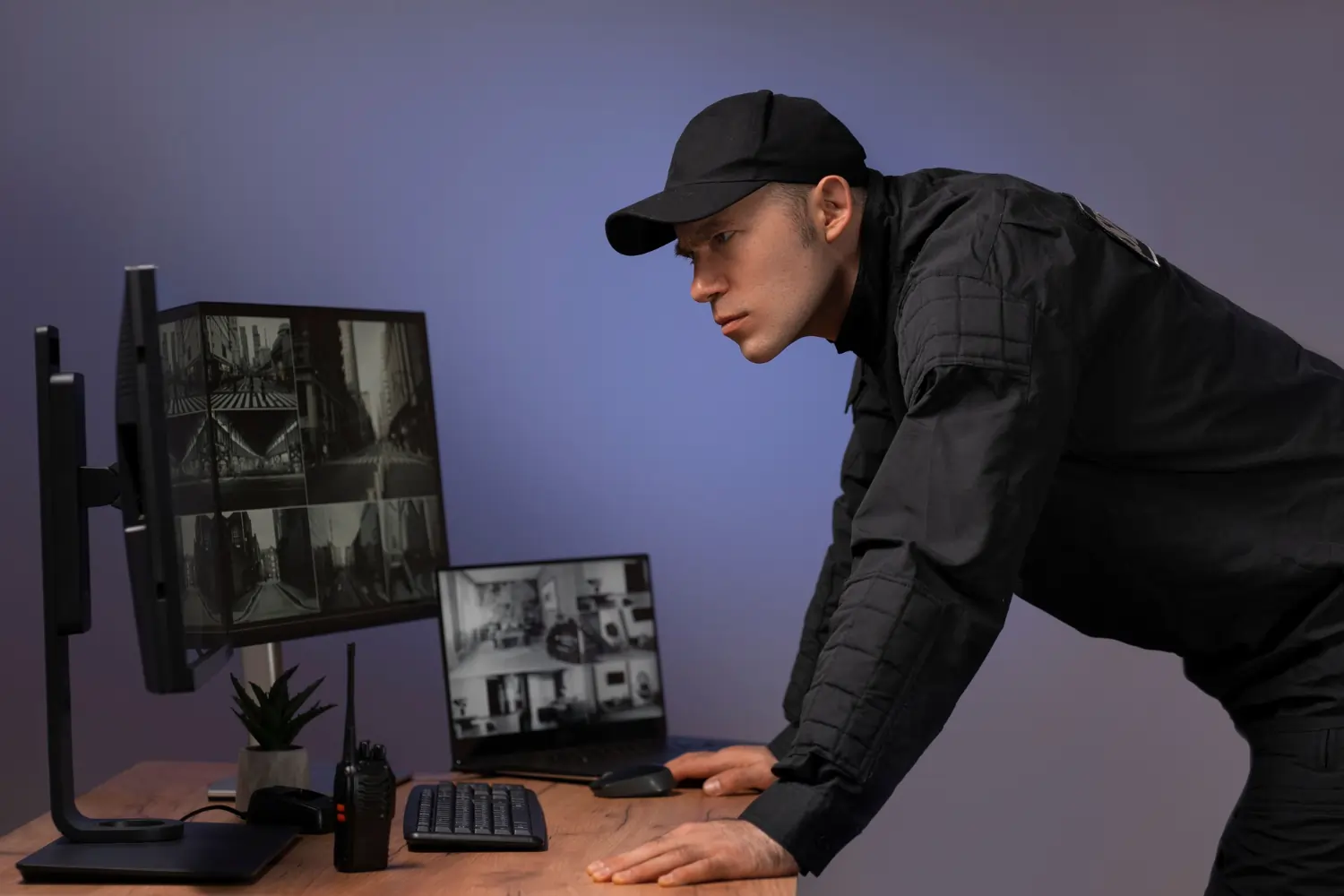
Using advanced AI, OHZ monitors all activities along the perimeter of critical infrastructure areas, including power generation plants, transmission infrastructure, and substations. These areas operate under strict access controls, allowing us to grant entry only to authorized individuals. Our facial recognition software effectively distinguishes employees from intruders, preventing unauthorized access.
Strengthening Perimeter Security with AI
OHZ ensures that AI-enabled technology is used to monitor the perimeter area of critical infrastructure facilities, such as power stations, transmission, and substations. The areas are very sensitive, and any breach could cause operational interruptions.
Furthermore, the use of AI to monitor the areas enhances the level of detection. Unlike human beings, AI can be used to detect movement and other anomalies, thus helping in addressing emerging issues in real time.
Reducing Risk Through Continuous Monitoring
Besides identification, constant monitoring also serves an essential purpose in preventing occurrences before they arise. Given the extensive nature of many sites for critical infrastructure, the process cannot be manually handled alone.
This means that automation is required in order to monitor activities without any interruptions at all times. Besides, the integration of perimeter analytics will enable more situational awareness when responding to threats.
Advanced Access Control for Restricted Areas
Access control is another essential layer of protection for critical infrastructure. Strict entry protocols ensure that only authorized individuals can enter secure zones. This reduces the risk of both external intrusions and internal security breaches.
In practice, OHZ systems enforce layered access verification, which strengthens overall site security. Consequently, unauthorized attempts to enter restricted areas are immediately detected and blocked.
Facial Recognition for Identity Verification
To further enhance access control, OHZ integrates facial recognition technology into its security framework. This system is capable of accurately distinguishing between employees and intruders by verifying identity in real time.
In addition, facial recognition reduces the reliance on manual ID checks, which can be slow and prone to human error. As a result, authorized personnel can move more efficiently through secure zones, while unauthorized access attempts are quickly identified and prevented.
Building a Safer and More Secure Infrastructure
Ultimately, combining AI-powered intruder detection with advanced access control creates a stronger and more resilient security environment. By integrating intelligent monitoring with biometric verification, organizations can significantly reduce security risks.
In conclusion, OHZ’s approach ensures that critical infrastructure remains protected at all times. Through continuous monitoring, precise detection, and reliable identity verification, it provides a comprehensive defense against unauthorized access and potential intrusions.
Effective Deterrence for Enhanced Security
At OHZ Security, we believe that no detail is too small when it comes to critical infrastructure security. Following the core principle of security, we never overlook minor signals. Ignoring seemingly insignificant signs can lead to major problems. Our attention to detail has been crucial in preventing numerous crimes.
The Importance of Small Signals
At OHZ Security, every detail is treated as potentially significant. In complex environments such as power generation plants, transmission networks, and substations, even minor anomalies can indicate the early stages of a larger security issue.
For example, unusual movement patterns near restricted areas or repeated low-level access attempts may seem harmless at first. However, when analyzed collectively, these signals can reveal coordinated intent or emerging risks. Therefore, ignoring small indicators can create vulnerabilities that may later lead to serious incidents.
A Proactive Security Mindset
Rather than reacting only to confirmed threats, modern security systems must adopt a proactive approach. This means continuously monitoring, analyzing, and interpreting activity to identify risks before they fully develop.
In addition, proactive security helps reduce response time and limits potential damage. As a result, organizations can maintain stronger operational stability while reducing exposure to disruptions.
Reducing Risks Through Continuous Attention
Consistency and attention to detail play a crucial role in preventing security breaches. By ensuring that no alert or anomaly is dismissed without evaluation, security teams can build a more accurate understanding of site activity.
Furthermore, advanced monitoring systems support this process by filtering and prioritizing alerts. This allows operators to focus on meaningful risks while still maintaining visibility over all activities. Consequently, even subtle warning signs are not overlooked.
Building Stronger Crime Prevention Strategies
Over time, careful observation and thorough analysis contribute to stronger overall crime prevention. When suspicious behavior is identified early and addressed appropriately, it reduces the opportunity for escalation.
Moreover, this disciplined approach reinforces deterrence. Potential intruders are less likely to act when they know that even minor actions are likely to be detected and investigated. In this way, security becomes not only reactive but also preventive.
OHZ Security’s Commitment to Precision
OHZ Security’s approach is built on the principle that no detail is too small when it comes to protecting critical infrastructure. By combining advanced monitoring systems with a strong focus on analytical precision, the organization ensures that subtle signals are never ignored.
In conclusion, this attention to detail has been instrumental in preventing numerous security incidents. Through continuous vigilance, proactive analysis, and disciplined response strategies, OHZ Security strengthens deterrence and enhances overall infrastructure protection.
Why Critical Infrastructure Security Matters
Critical infrastructure security is essential because modern society depends heavily on continuous and reliable services such as electricity, water, transportation, and communication. When these systems are disrupted, the effects are immediate and often far-reaching. Protecting them is therefore not only a technical requirement but also a matter of public safety and economic stability.
The Impact of Power Loss and Service Disruption
One of the most direct consequences of infrastructure attacks or failures is power loss. Even a short outage can interrupt essential services such as hospitals, emergency response systems, water treatment facilities, and communication networks.
In addition, service disruptions can cascade quickly. For example, a failure in one substation can affect transmission lines and lead to widespread blackouts. As a result, entire regions may experience downtime, affecting both daily life and critical operations.
Moreover, businesses suffer significantly during outages. Manufacturing processes may halt, data systems can go offline, and financial transactions may be delayed. Consequently, even brief disruptions can lead to substantial economic losses.
The Risk of Asset Damage
Beyond service interruptions, physical damage to infrastructure assets can create long-term challenges. Equipment such as transformers, control systems, and transmission components are expensive and time-consuming to repair or replace.
Furthermore, damaged infrastructure often requires specialized maintenance, which can extend downtime. In some cases, the ripple effects of a single damaged asset can impact the stability of an entire grid. Therefore, protecting physical assets is just as important as ensuring operational continuity.
Impact on Communities and Public Safety
Attacks on critical infrastructure do not only affect utilities—they directly impact communities. Residential areas may lose electricity, water supply, or communication services, which can disrupt daily life and create unsafe conditions.
In addition, public safety services such as fire departments, hospitals, and emergency response teams rely on stable infrastructure to function effectively. When these systems are compromised, response times may slow, and emergency coordination can become more difficult.
As a result, infrastructure security plays a key role in maintaining public safety and social stability.
Economic and Social Consequences
Infrastructure disruptions also have broader economic and social consequences. Businesses may lose productivity, supply chains can be interrupted, and transportation systems may face delays. Over time, repeated disruptions can reduce investor confidence and slow regional development.
Moreover, communities may experience increased stress and uncertainty when essential services are unreliable. This highlights how deeply interconnected modern infrastructure is with everyday life.
The Need for Uninterrupted Protection
Given these risks, uninterrupted protection of critical infrastructure is essential. Security systems must operate continuously, detecting threats early and responding without delay. In addition, they must be resilient enough to function even during adverse conditions.
Therefore, modern security strategies focus on proactive monitoring, rapid response, and layered protection. This ensures that potential threats are managed before they can escalate into major disruptions.
In conclusion, critical infrastructure security matters because it safeguards the systems that modern life depends on. By ensuring uninterrupted protection, organizations can protect communities, support economic stability, and maintain public safety even in the face of evolving threats.
The Challenges of Securing Critical Infrastructure
Securing critical infrastructure is a complex task because these environments are large, geographically dispersed, and often high-risk by nature. Facilities such as power plants, transmission networks, and substations must operate continuously, yet they also need strong protection against a wide range of physical and digital threats. This combination creates significant operational and security challenges.
Protecting Large and Distributed Facilities
One of the primary difficulties lies in scale. Critical infrastructure is rarely concentrated in a single location. Instead, it is spread across remote substations, wide transmission corridors, and isolated operational sites.
As a result, maintaining consistent security coverage across all locations becomes challenging. Even when central monitoring systems are in place, physical distances can delay response times and limit on-site intervention. In addition, remote locations are often more vulnerable because they are harder to patrol and monitor continuously.
Budget and Staffing Constraints
Another major challenge is limited resources. Security budgets are often stretched across multiple priorities, including maintenance, upgrades, and operational costs. Therefore, it is not always possible to deploy high-end security systems or personnel at every site.
Similarly, staffing constraints can affect security effectiveness. Many infrastructure sites operate with minimal on-site personnel, especially in unmanned or semi-automated facilities. Consequently, relying solely on human monitoring becomes impractical, particularly during night hours or in low-access areas.
Moreover, training and retaining specialized security staff adds further complexity. Skilled personnel are required to understand both operational risks and security protocols, which increases overall costs.
Evolving and Increasingly Sophisticated Threats
In addition to logistical challenges, threats to critical infrastructure are constantly evolving. Traditional risks such as theft, vandalism, and trespassing have now expanded to include more coordinated and sophisticated attacks.
Furthermore, attackers are increasingly aware of security gaps in distributed systems. They may exploit blind spots, weak access controls, or delayed response mechanisms. As a result, security strategies must continuously adapt to stay ahead of emerging risks.
This ongoing evolution makes static security models less effective over time. Systems that are not regularly updated or enhanced can quickly become outdated.
Why Traditional Security Is Not Enough
Traditional security approaches—such as physical patrols, basic CCTV systems, and manual access control—are no longer sufficient on their own. While they still play an important role, they often lack the speed, scale, and intelligence required for modern threats.
For example, manual monitoring may not detect subtle anomalies in real time. Similarly, human response times can be delayed, especially when incidents occur across multiple remote sites simultaneously.
Therefore, modern infrastructure security requires a more integrated approach that combines automation, real-time analytics, and intelligent response systems. This allows organizations to detect threats faster, respond more efficiently, and reduce overall risk exposure.
Moving Toward Smarter Security Models
In conclusion, securing critical infrastructure requires balancing scale, cost, and evolving risk. Because traditional methods alone cannot fully address these challenges, organizations must adopt more advanced and adaptive security strategies.
By integrating intelligent monitoring with proactive response capabilities, infrastructure operators can improve resilience and ensure continuous protection across even the most complex environments.
Intelligent Video Technology for Comprehensive Surveillance
When deploying CCTV monitoring systems, the OHZ Remote Guarding team provides clients with the latest advancements in security surveillance technology. Our sophisticated solutions identify threats across every square inch of the property, day or night.Are you ready to enhance your critical infrastructure security? Our team of security experts is prepared to review your property, assess its security needs, and craft a personalized security solution. We offer a complimentary security plan, allowing you to experience the exceptional service and expertise of OHZ Remote Guarding.
For more information on securing your critical infrastructure, contact us today or visit our security solutions page for additional details.
FAQs
Critical infrastructure security protects essential systems like power grids and substations from threats such as vandalism, theft, and cyberattacks. OHZ Security uses AI surveillance, real-time monitoring, and advanced access control to detect threats early, prevent incidents, and ensure uninterrupted operations.
What is critical infrastructure security?
Critical infrastructure security refers to the protection of essential systems such as power plants, substations, transmission networks, water systems, and communication facilities from physical and cyber threats.
Why is critical infrastructure security important?
It is important because disruptions to critical infrastructure can affect public safety, economic stability, transportation, healthcare, and daily life. Continuous protection helps prevent outages, damage, and operational failures.
What are the biggest threats to power utilities?
Common threats include vandalism, theft, unauthorized access, terrorism, cyberattacks, equipment sabotage, and internal system vulnerabilities.
How does video surveillance improve infrastructure security?
Video surveillance provides real-time monitoring, records incidents for investigation, and helps security teams detect suspicious activity early before it escalates into a serious threat.
What role does AI play in security monitoring?
AI helps identify unusual behavior, detect intrusions, analyze movement patterns, and automate threat detection. It also improves response speed and reduces human error.
How does OHZ Security protect remote substations?
OHZ Security uses AI-powered surveillance systems, perimeter monitoring, facial recognition, and 24/7 remote guarding to secure isolated and unmanned facilities.
What is advanced access control?
Advanced access control ensures that only authorized individuals can enter restricted areas through technologies such as biometric verification, facial recognition, and layered authentication.
Can video surveillance operate at night and in harsh conditions?
Yes. Modern surveillance systems are designed to function effectively day and night, even in challenging weather and low-visibility conditions.
Why are traditional security methods no longer enough?
Traditional methods like manual patrols and basic alarms may not detect threats quickly enough. Modern infrastructure requires intelligent systems that provide automation, real-time analytics, and proactive response capabilities.
How can organizations improve critical infrastructure security?
Organizations can improve security by implementing AI-driven surveillance, continuous monitoring, advanced access control, predictive analytics, and rapid response systems such as those provided by OHZ Security.

Security content creator with OHZ Remote Guarding, focusing on advanced asset protection strategies during extended business closures and seasonal risks.