Manned Guarding vs. Remote Guarding: A Year-End Cost Comparison and ROI Analysis
Learn how to protect high-value assets beyond vandalism during long winter breaks. Discover OHZ’s proactive security solutions.
A key part of this evaluation is understanding the cost of manned guarding vs remote security, which goes far beyond simple hourly wage comparisons. When businesses break down long-term expenses, they often discover that traditional guarding includes significant hidden costs such as overtime, recruitment, training, and supervision, whereas remote security solutions offer a more predictable and scalable pricing model supported by advanced technology and centralized monitoring.
As 2025 draws to a close, businesses across all sectors are meticulously reviewing their operational expenditures and strategically planning for 2026. A critical area often scrutinized is security – a non-negotiable aspect of protecting assets, personnel, and reputation. For years, the debate between traditional manned guarding and advanced remote guarding services has been ongoing. However, with technological advancements and evolving economic landscapes, a clear picture of true cost-effectiveness and return on investment (ROI) is emerging.
This year-end analysis delves into a comprehensive comparison, moving beyond initial sticker shock to uncover the hidden costs and tangible benefits of remote guarding services versus traditional security methods, ultimately defining the superior choice for modern businesses.
The Full Picture: Unpacking the Costs of Manned Guarding
At first glance, the hourly rate of a security guard might seem straightforward. However, a deeper dive reveals a complex web of expenditures that often inflate the “true cost” of human presence.
Direct Costs:
Salaries & Wages: This is the most obvious. However, it’s rarely just the hourly rate. Overtime pay, night shift differentials, and holiday bonuses can significantly increase this figure.
Benefits & Insurance: Health insurance, retirement plans, worker’s compensation, and liability insurance are substantial, mandatory overheads for every employee.
Training & Licensing: Initial and ongoing training, as well as maintaining required licenses and certifications, incur regular costs.
Uniforms & Equipment: Purchase and maintenance of uniforms, communication devices, and other personal equipment.
Hidden & Indirect Costs:
Supervision & Management: The need for supervisors, scheduling managers, and HR support for a security team adds administrative burden and costs.
Turnover & Recruitment: The security industry faces high turnover rates. The cost of recruiting, onboarding, and training new guards (including background checks) is a continuous expense.
Human Error & Fatigue: Guards are human; they can get sick, take breaks, experience fatigue, or be distracted. This introduces vulnerabilities and potential for error, which can lead to costly incidents.
Limited Coverage: A single guard can only be in one place at a time. Securing a large perimeter often requires multiple guards, multiplying all the above costs.
Lack of Documentation: Manual reporting can be inconsistent, making it difficult to analyze incidents and demonstrate compliance effectively.
Key Takeaway: While seemingly reliable, the overall financial footprint of manned guarding is often far greater than just the hourly wage, with many hidden costs that erode potential ROI.
One of the most overlooked aspects in traditional security planning is the hidden costs of security, which significantly impact the overall budget without being immediately visible on paper. Beyond direct wages, businesses must account for expenses related to supervision, recruitment, training, and high staff turnover, all of which continuously add to operational overhead. Additionally, factors such as human error, fatigue, and limited coverage further increase the risk of incidents that can lead to financial losses, while inconsistent reporting and documentation make compliance and analysis more difficult. These combined hidden costs often make traditional security far more expensive in the long run than initially estimated.

The Future is Now: Understanding Remote Guarding Costs & Unmatched ROI
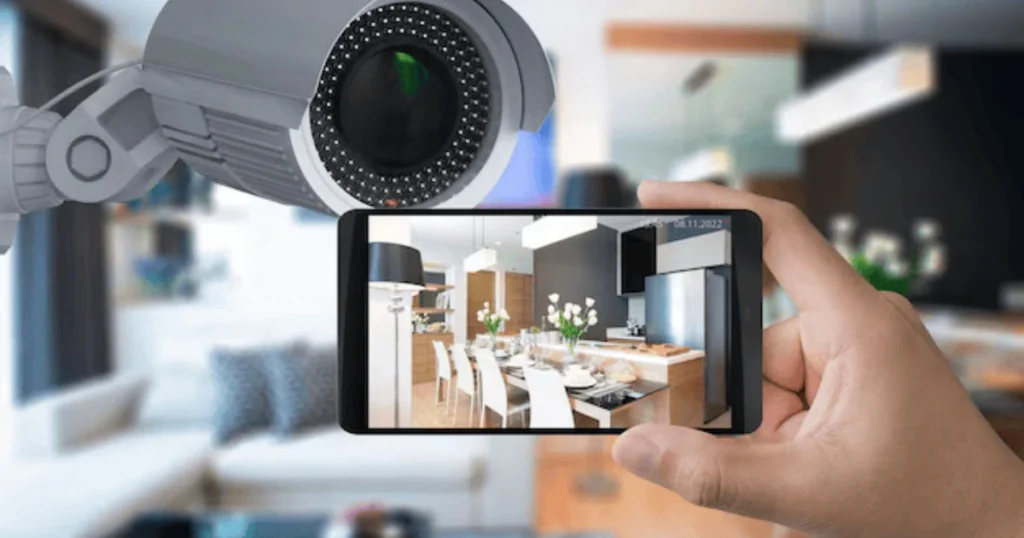
Remote guarding, leveraging advanced AI, high-definition cameras, and expert human operators, offers a fundamentally different cost structure and a significantly higher ROI.
Transparent & Predictable Costs:
Fixed Monthly Fees: Remote guarding typically operates on predictable monthly or annual contracts, making budgeting straightforward with no hidden overtime, benefits, or recruitment costs.
Technology Investment (Optional/Included): Initial setup might involve camera installation or upgrades, but these are often amortized or included in comprehensive service packages. Modern systems offer clearer images, better analytics, and fewer false alarms.
Scalability: Easily scale your security up or down without hiring or firing staff. Need more coverage? Add more cameras or analytical zones.
A major advantage of modern security solutions lies in the remote guarding ROI 2026, which continues to outperform traditional security models in measurable and strategic ways. By combining AI-powered monitoring with real-time human intervention, remote guarding not only reduces operational costs but also actively prevents losses before they occur, significantly improving overall return on investment. Businesses benefit from fewer security incidents, reduced false alarms, lower insurance claims, and improved asset protection, making remote guarding a financially and operationally smarter choice for the year ahead.

Tangible & Superior ROI:
Significant Cost Savings: Studies consistently show that remote guarding can reduce security costs by 30-70% compared to manned guarding, without compromising coverage. These savings go directly to your bottom line.
Proactive Crime Prevention: This is where remote guarding ROI truly shines.
Voice-Down Intervention: OHZ (or similar) operators can issue live audio warnings, often deterring criminals before they cause damage or theft. This prevents loss entirely, rather than just reporting it.
Reduced False Alarms: AI-powered analytics dramatically reduce false alarms, saving you costly fines and ensuring law enforcement resources are utilized effectively.
24/7 Unwavering Vigilance: AI doesn’t get tired, sick, or distracted. Paired with human oversight, it provides consistent, high-level monitoring around the clock.
Enhanced Evidence & Documentation: High-quality video recordings and detailed incident reports provide irrefutable evidence for insurance claims and law enforcement, streamlining processes and maximizing recovery.
Increased Safety: Proactive deterrence protects not only your assets but also your employees and customers from potential harm.
Operational Efficiency: Free up internal resources that would otherwise be spent managing a security team. Focus on your core business while experts manage your security.
Data-Driven Insights: Remote guarding systems collect valuable data on site activity, allowing for strategic placement of cameras, optimization of protocols, and predictive analytics to anticipate future threats. This leads to a continuously improving security posture.
When comparing construction monitoring vs security guard, businesses are increasingly shifting toward technology-driven solutions that offer broader coverage and better cost efficiency. Traditional security guards provide on-site presence and basic surveillance, but they are limited by human constraints such as fatigue, shift gaps, and restricted visibility across large construction areas. In contrast, modern construction monitoring systems use AI-enabled cameras and remote surveillance to provide continuous 24/7 oversight with instant alerts and real-time threat detection across the entire site. This ensures that every area of the construction project is consistently monitored without gaps in coverage. The approach enhances site safety and reduces risks of theft and unauthorized access while also lowering labor costs associated with on-site security staff. It further minimizes human error and fatigue-related issues, delivering more reliable performance. Overall, it offers a highly scalable and cost-effective security solution for construction projects of all sizes.
Year-End Comparison: Why 2026 Budgets Favor Remote Guarding
| Feature/Cost Factor | Manned Guarding | Remote Guarding (with AI & Human Verification) |
| Direct Costs | High (Salaries, Benefits, OT, Equipment) | Predictable (Fixed Monthly Fees, often lower overall) |
| Hidden Costs | Significant (Turnover, Training, Management, Fatigue) | Minimal (Managed by service provider) |
| Coverage | Limited by physical presence (1-2 areas max) | Comprehensive (Entire perimeter, multiple entry points 24/7) |
| Proactivity | Reactive (After-the-fact reporting often) | Highly Proactive (Voice-Downs, AI Detection, Live Intervention) |
| Loss Prevention | Reports incidents, may not prevent | Actively Prevents Loss through deterrence and early warning |
| False Alarms | Prone to human error, can be high | Dramatically reduced by AI verification & human confirmation |
| Evidence & Reporting | Varies, often manual, inconsistent | High-quality video, detailed digital reports |
| Scalability | Difficult, costly to add/remove staff | Easy, cost-effective to adjust coverage |
| ROI | Lower (Higher costs, less effective prevention) | Significantly Higher (Lower costs, superior prevention) |
One of the strongest advantages of modern security systems is the ability to deliver measurable financial efficiency through remote guarding cost saving, which significantly reduces overall security expenditures while improving protection quality. By replacing large on-site guarding teams with AI-driven surveillance supported by human monitoring, businesses can significantly reduce security expenses related to salaries, overtime, recruitment, and management while still ensuring continuous 24/7 coverage and proactive threat detection. This approach improves operational efficiency by minimizing unnecessary costs and resource wastage. It also strengthens overall return on investment by reducing losses, lowering false alarm rates, and enabling faster incident response. As a result, remote guarding becomes a more strategic, scalable, and cost-effective security solution for businesses planning their 2026 budgets.
Human in the Loop Security Balancing Technology and Cost Efficiency
Human in the loop security is a modern approach that combines advanced AI-driven monitoring systems with real-time human verification to ensure accurate threat detection and response. In the discussion of the cost of manned guarding vs remote security, this model is becoming increasingly important as businesses look for ways to reduce expenses while maintaining strong protection levels. Instead of relying entirely on on-site guards, AI systems monitor activity continuously and alert trained security professionals only when intervention is required. This reduces unnecessary manpower costs while still ensuring human judgment is applied in critical situations.
Human in the loop security combines AI-powered monitoring with real-time human verification to improve accuracy, reduce false alarms, and enhance response times in modern security systems. In this approach, Human in the Loop Security plays a key role in ensuring that critical decisions are validated by trained professionals while AI handles continuous surveillance, helping businesses achieve better efficiency and cost control. This balanced model is especially effective for organizations looking to optimize safety without increasing operational overhead.
Key advantages include
It also improves threat detection accuracy through continuous AI monitoring while still allowing human experts to verify alerts and reduce false alarms. This approach enables scalable security coverage across multiple sites without proportionally increasing expenses and ultimately delivers better efficiency and stronger return on investment for businesses comparing modern security solutions.
- Reduced dependency on large on-site security teams
- Lower operational and staffing costs compared to traditional guarding
- Faster and more accurate threat detection through AI analysis
- Human verification to reduce false alarms and improve response quality
- Scalable security coverage across multiple locations without additional guards
- Improved overall efficiency and return on investment for businesses
Industries That Benefit Most From Internal Theft Monitoring
Internal theft is one of the most costly and often overlooked challenges businesses face today. However, it does not usually happen as a single major incident. Instead, most losses build up gradually through small, repeated actions such as inventory manipulation, cash discrepancies, or unauthorized access. As a result, businesses often fail to notice the damage until it becomes significant.
Therefore, internal theft monitoring has become essential across multiple industries. It helps organizations detect irregular patterns early, improve transparency, and reduce operational losses. Moreover, it strengthens accountability among employees and supports more efficient business operations.
Retail Stores
Retail businesses are among the most affected by internal shrinkage due to high employee interaction with cash and inventory. For instance, issues like POS abuse, false discounts, unrecorded transactions, and stock manipulation can significantly impact profit margins over time. In addition, inventory shrinkage often occurs when products are misplaced, stolen, or not properly accounted for during daily operations.
Therefore, internal theft monitoring helps retailers maintain accurate stock levels and ensures transparency in every transaction.
According to data published in the National Retail Federation Impact of Retail Theft and Violence Report, internal theft and employee fraud account for nearly a third of all preventable retail losses, with the average internal theft incident costing businesses far more than typical shoplifting. In addition, inventory shrinkage often occurs when products are misplaced, stolen, or not properly accounted for during daily operations.
Warehouses
Warehouses handle large volumes of goods moving in and out daily, which makes them highly vulnerable to internal diversion. Employees may exploit weak checkpoints or lack of surveillance to redirect inventory or bypass proper logging systems. Furthermore, loading dock theft is a major concern, where goods go missing during dispatch or receiving processes.
In addition, unauthorized access to restricted storage areas can lead to significant losses. As a result, monitoring systems play a key role in ensuring accountability at every stage of inventory movement.
Hospitality
Hotels, restaurants, and other hospitality businesses often experience unnoticed internal losses due to the fast-paced nature of operations. For example, cash skimming at front desks or billing counters can go undetected without proper oversight. Similarly, supply theft from kitchens, housekeeping stores, or storage areas adds up over time.
Moreover, unauthorized use of backroom spaces or stockrooms can create inconsistencies in inventory tracking. Therefore, internal monitoring helps maintain operational discipline and reduces revenue leakage.
Healthcare
Healthcare facilities require strict control due to the sensitive nature of their assets and operations. Medication access violations are a serious concern, especially when controlled substances are involved. In addition, restricted area compliance is critical to ensure only authorized personnel enter specific zones such as pharmacies, labs, or storage rooms.
Equipment theft or misuse can also lead to financial loss and compromise patient care. Therefore, monitoring systems help enforce compliance and protect critical medical resources more effectively.
Logistics & Distribution
Logistics and distribution companies operate in high-volume, time-sensitive environments where even small discrepancies can cause major losses. Shipment diversion, where goods are intentionally misrouted or unaccounted for, is one of the key risks. Additionally, inventory manipulation during sorting or transit can lead to inaccurate tracking records.
Dock activity monitoring is also essential to ensure all loading and unloading processes are properly supervised and documented. As a result, internal monitoring helps maintain supply chain integrity and operational accuracy.
Why Internal Theft Monitoring Matters
Across all industries, internal theft is not just about preventing financial loss—it is also about building trust and improving accountability. Moreover, it plays a crucial role in ensuring smooth and transparent operations.
In conclusion, internal theft monitoring systems help businesses detect risks early, reduce shrinkage, and create a more secure working environment. Ultimately, they support long-term stability by strengthening both operational control and employee accountability.
Why Businesses Choose OHZ Security
Internal theft is one of the most costly and often overlooked challenges businesses face today. However, it does not usually happen as a single major incident. Instead, most losses build up gradually through small, repeated actions such as inventory manipulation, cash discrepancies, or unauthorized access. As a result, businesses often fail to notice the damage until it becomes significant.
Therefore, internal theft monitoring has become essential across multiple industries. It helps organizations detect irregular patterns early, improve transparency, and reduce operational losses. Moreover, it strengthens accountability among employees and supports more efficient business operations.
Retail Stores
Retail businesses are among the most affected by internal shrinkage due to high employee interaction with cash and inventory. For instance, issues like POS abuse, false discounts, unrecorded transactions, and stock manipulation can significantly impact profit margins over time. In addition, inventory shrinkage often occurs when products are misplaced, stolen, or not properly accounted for during daily operations.
Therefore, internal theft monitoring helps retailers maintain accurate stock levels and ensures transparency in every transaction.
Warehouses
Warehouses handle large volumes of goods moving in and out daily, which makes them highly vulnerable to internal diversion. Employees may exploit weak checkpoints or lack of surveillance to redirect inventory or bypass proper logging systems. Furthermore, loading dock theft is a major concern, where goods go missing during dispatch or receiving processes.
In addition, unauthorized access to restricted storage areas can lead to significant losses. As a result, monitoring systems play a key role in ensuring accountability at every stage of inventory movement.
Hospitality
Hotels, restaurants, and other hospitality businesses often experience unnoticed internal losses due to the fast-paced nature of operations. For example, cash skimming at front desks or billing counters can go undetected without proper oversight. Similarly, supply theft from kitchens, housekeeping stores, or storage areas adds up over time.
Moreover, unauthorized use of backroom spaces or stockrooms can create inconsistencies in inventory tracking. Therefore, internal monitoring helps maintain operational discipline and reduces revenue leakage.
Healthcare
Healthcare facilities require strict control due to the sensitive nature of their assets and operations. Medication access violations are a serious concern, especially when controlled substances are involved. In addition, restricted area compliance is critical to ensure only authorized personnel enter specific zones such as pharmacies, labs, or storage rooms.
Equipment theft or misuse can also lead to financial loss and compromise patient care. Therefore, monitoring systems help enforce compliance and protect critical medical resources more effectively.
Logistics & Distribution
Logistics and distribution companies operate in high-volume, time-sensitive environments where even small discrepancies can cause major losses. Shipment diversion, where goods are intentionally misrouted or unaccounted for, is one of the key risks. Additionally, inventory manipulation during sorting or transit can lead to inaccurate tracking records.
Dock activity monitoring is also essential to ensure all loading and unloading processes are properly supervised and documented. As a result, internal monitoring helps maintain supply chain integrity and operational accuracy.
Why Internal Theft Monitoring Matters
Across all industries, internal theft is not just about preventing financial loss—it is also about building trust and improving accountability. Moreover, it plays a crucial role in ensuring smooth and transparent operations.
In conclusion, internal theft monitoring systems help businesses detect risks early, reduce shrinkage, and create a more secure working environment. Ultimately, they support long-term stability by strengthening both operational control and employee accountability.
Conclusion: Securing Your Future with Smart Investments
As businesses finalize their budgets for 2026, the choice is clear. While manned guarding has its place in specific, high-risk scenarios, for the vast majority of commercial properties, remote guarding offers a superior, more cost-effective, and ultimately more proactive security solution.
Investing in advanced remote guarding isn’t just about cutting costs; it’s about investing in peace of mind, unparalleled protection, and a demonstrable return on your security investment. Make 2026 the year your security budget works smarter, not just harder.
Ready to explore the true ROI of remote guarding for your business? Contact OHZ Security today for a personalized cost analysis.
FAQs
Remote guarding combines AI-powered cameras with live monitoring operators to provide 24/7 security protection.Compared to traditional manned guarding, it offers faster threat detection, fewer false alarms, and significantly lower operating costs.
Is remote guarding cheaper than manned guarding?
Yes. Remote guarding is usually 30–70% more affordable than traditional manned guarding because it reduces labor costs like overtime, hiring, training, and benefits while still providing 24/7 monitoring.
What is the difference between manned guarding and remote guarding?
Manned guarding uses on-site security personnel, while remote guarding relies on AI-powered cameras and live monitoring operators. Remote guarding offers wider coverage, faster threat detection, and lower costs.
How does remote guarding work?
Remote guarding combines smart cameras, AI analytics, and live operators. When suspicious activity is detected, operators verify the threat, issue voice warnings, or contact emergency services to stop incidents before they escalate.
Can remote guarding replace security guards completely?
In many cases, yes. However, some businesses still need on-site guards for access control, concierge services, or high-risk situations. Many companies use a hybrid model with both remote monitoring and limited on-site staff.
What industries benefit most from remote guarding?
Industries like construction, warehouses, manufacturing, logistics, retail, commercial buildings, car dealerships, and vacant properties benefit most because they require large-area, around-the-clock monitoring.
Does remote guarding reduce false alarms?
Yes. AI detection combined with human verification helps filter out non-threats, reducing false alarms, unnecessary dispatches, and operational disruptions.
What is human-in-the-loop security?
Human-in-the-loop security combines AI surveillance with live operators. AI detects unusual activity, while trained professionals verify and respond to threats for greater accuracy and faster action.
How much does remote guarding cost?
Costs vary based on property size, camera count, and monitoring needs. However, remote guarding is generally far more affordable than hiring full-time on-site guards due to predictable monthly monitoring fees.
Is remote guarding effective for construction sites?
Yes. Remote guarding is highly effective for construction sites because AI-enabled cameras can monitor large perimeters, detect intrusions instantly, and prevent theft or vandalism in real time.
Why are businesses switching to remote guarding in 2026?
Businesses are adopting remote guarding because it offers better ROI, lower operating costs, proactive threat prevention, and scalable 24/7 security powered by AI and real-time monitoring.

Security content creator with OHZ Remote Guarding, focusing on advanced asset protection strategies during extended business closures and seasonal risks.