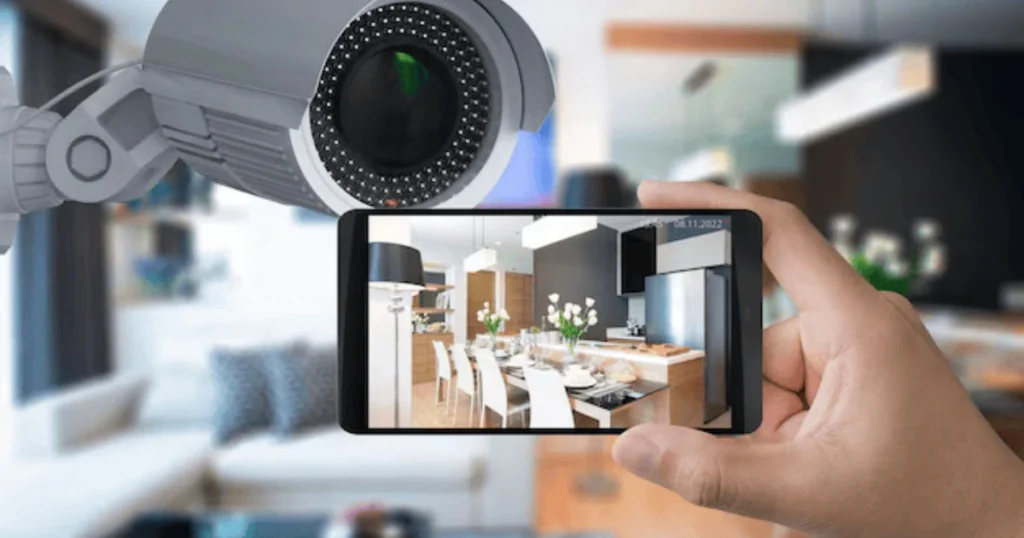
Why Human in the Loop Is Critical for AI Security
Human in the loop security is the term used to refer to the current generation of security systems that have managed to bring together the strengths of AI systems and human intelligence. Even though AI systems are quite effective in the detection and analysis of threats in a timely manner, they might not have enough information required to make sound judgments in some instances. For instance, a system can mistake a maintenance worker for an intruder or identify weather-related anomalies as possible threats. By incorporating the role of humans in decision-making processes, important information is considered when making crucial judgments and decisions.
This article explores the human-in-the-loop security model and explains why combining artificial intelligence with human expertise is the only way to achieve true reliability. Even remote guard monitoring and live video monitoring technologies can struggle with changes in lighting, facial expressions, or cultural nuances, further highlighting the limits of pure automation. These examples underscore a critical point: while intelligent video monitoring can process vast amounts of data at unprecedented speeds, it lacks the intuition, empathy, and situational awareness that human remote guarding services bring to security decision-making.
The Power of the Machine: What AI Does Best
First, let’s acknowledge the incredible power of AI. It acts as a tireless digital guard, performing tasks at a scale no human could match.
- 24/7 Vigilance: AI never sleeps, gets distracted, or takes a break.
- Superhuman Speed: It analyzes feeds from dozens of cameras simultaneously, detecting anomalies in milliseconds.
- Pattern Recognition: As we explained in our article on how AI verification works, it excels at filtering out 95% of the noise, like animals and weather events.
At its core, AI’s job is simple but vital: sift through mountains of data to find the one signal that truly matters. Yet, once it flags a potential issue, its role stops there. Understanding context, assessing risk, and deciding how to respond? That’s where human judgment remains irreplaceable.
Ultimately, the AI’s primary job is to sift through mountains of data to find the single event that truly matters. However, its job effectively ends there.
The Limits of Automation: Where AI Falls Short
Despite its immense power, AI lacks uniquely human skills. For instance, it struggles with:
- Nuanced Context: Is that person on the roof a burglar, or a contractor retrieving a tool they left behind? An AI only sees a person in a restricted area; it cannot understand the nuance.
- Adaptability: AI is trained on past data. Consequently, novel situations it has never encountered before can easily confuse it.
- Dynamic De-escalation: A pre-recorded message is static. It simply cannot tailor its tone or message to a specific, evolving situation as a trained human can.
- Ethical and Legal Judgment: Ethical and Legal Assessment: An AI system lacks the ability to engage in ethical decision-making and can never assess gray areas related to security enforcement measures. The consideration of proportionality, respect for privacy, and possible side effects is an activity exclusively reserved for humans.
- Cultural and Social Awareness: The social, cultural, and behavioral nuances are picked up by human security staff, things that the AI might overlook at times. As a matter of fact, an action that would seem like a threat in one society could mean something entirely different in another society.
AI is great for its capacity to be quick, large-scale, and handle massive amounts of information, but what it cannot do is substitute for human intuition, compassion, and flexibility in security operations. The best security strategy, therefore, lies in a combination of the two—where AI’s efficiency can work hand-in-hand with human wisdom to create a highly efficient, yet adaptable and moral process.
The Human-in-the-Loop: OHZ’s Expert Intervention Model
It is here where the “human” component really matters. At OHZ, we strongly believe that AI should be used to empower our specialists, not replace them. In fact, the human in the loop security testing approach adopted at OHZ guarantees that all alerts raised by AI will be assessed by our professionals immediately.
This is precisely where the “human” part of the equation becomes critical. At OHZ, we firmly believe AI should function as a powerful tool for our experts, rather than a replacement for them. Our human-in-the-loop security model ensures that every credible threat flagged by the AI is instantly reviewed by a trained professional.
Verification and Judgment
Our expert operator makes the final call. They apply their experience and common sense to verify that the threat is indeed real. This process eliminates that last fraction of a percent of potential false alarms and always ensures an appropriate response.
Dynamic Response and De-escalation
Furthermore, instead of a generic alarm, our operator can issue live, authoritative voice-down commands specifically tailored to the situation. They can be calm, firm, or urgent, effectively using their voice as a powerful tool to de-escalate the situation and prevent damage.
Strategic Escalation
If an intruder does not comply, our operator doesn’t just call 911. Instead, they provide law enforcement with critical, real-time information: “This is a verified trespass in progress. There is one individual, male, wearing a blue jacket, located at the southeast corner of the building.” This level of detail ensures a faster, more prioritized police response. For more insights on this topic, tech authorities like Gartner have extensively covered the value of human-in-the-loop systems.
Continuous Learning and Improvement
One of the biggest advantages of a human-in-the-loop model is the feedback loop it creates. Every decision made by a human operator—whether verifying a true threat or dismissing a false alarm—feeds back into the AI system, improving its future accuracy. Over time, this iterative process allows AI to become smarter and more precise, while humans remain in control, ensuring that judgment and ethical considerations are never compromised.
Customized Security Protocols
Humans can tailor responses to the specific environment, building, or event. For example, a corporate campus, a hospital, and a manufacturing plant each have unique security requirements. AI can provide broad monitoring and anomaly detection, but only human experts can understand how these nuances—like the location of sensitive equipment, traffic patterns, or emergency procedures—affect decision-making in real time.
Crisis Management Beyond Detection
In situations like natural disasters, protests, or active shooter events, AI can detect unusual activity but cannot coordinate complex responses. Human operators can simultaneously guide occupants, liaise with first responders, and adapt strategies as the situation evolves. The human element ensures that security is proactive, adaptive, and holistic, rather than reactive and rigid.
Ethics, Compliance, and Accountability
Security is not just about stopping threats; it’s about doing so responsibly. Human operators ensure that all interventions respect privacy, adhere to regulations, and follow company protocols. This oversight reduces liability, prevents overreach, and builds trust with employees, customers, and the public.
Integration Across Systems
Modern security environments rely on multiple technologies—CCTV, access control, motion sensors, and cybersecurity tools. Humans are essential for integrating AI insights across these systems, correlating data, and making high-level decisions that a single algorithm cannot achieve. For instance, if a motion sensor triggers an alert while access control logs show an authorized entry, a human can quickly resolve the discrepancy, while AI alone might flag it as suspicious.
Industry Trends and Adoption
Leading organizations across sectors—from finance to logistics to healthcare—are embracing human-in-the-loop models. Analysts report that hybrid approaches consistently reduce false positives by up to 70% and improve response times in critical incidents. Companies that rely solely on AI risk both inefficiency and public backlash, highlighting that humans and machines are strongest when working together.
AI vs Human Performance Matrix
AI is exceptionally strong at detecting anomalies—but detection alone doesn’t solve real-world security challenges. Without human judgment, AI can trigger unnecessary alarms, disrupt operations, or misinterpret situations. The most effective approach is a human-in-the-loop model, where AI identifies risks and trained operators make the final decision.
How AI + Human Verification Improves Outcomes
| Scenario | AI Detection | AI Response | Human-in-Loop | Outcome |
|---|---|---|---|---|
| Lost Delivery | 97% | False alarm | Context verified | De-escalated |
| Contractor Access | 92% | Lockdown | Visual check | Access granted |
| Weather Movement | 85% | Alarm | Filtered | No action |
| Mental Health Event | 97% | Threat alert | Human response | Welfare check |
| Suspicious Vehicle | 99% | Alert only | Coordinated action | Police priority |
- Lost Delivery
- AI flags unusual activity near entry points
- Human verifies delivery context via live video
- Outcome: Situation de-escalated, no disruption
- Contractor Access
- AI detects unauthorized access attempt
- Human performs visual verification and credential check
- Outcome: Access granted safely without operational delay
- Weather Movement
- AI detects motion caused by wind or environmental changes
- Human filters out false alarm instantly
- Outcome: No unnecessary alerts or interruptions
- Mental Health Event
- AI identifies unusual or distress-related behavior
- Human assesses situation and responds appropriately
- Outcome: Welfare check initiated instead of escalation
- Suspicious Vehicle
- AI detects unknown vehicle and flags activity
- Human coordinates response and escalates if needed
- Outcome: Faster, prioritized law enforcement action
These examples illustrate a fundamental principle: AI is excellent at seeing anomalies, humans are essential at understanding them. By combining AI’s speed and analytical power with human judgment, organizations can prevent false alarms, de-escalate sensitive situations, and prioritize real threats efficiently. The human-in-the-loop model turns raw AI data into actionable intelligence, creating a security system that is not only reactive but proactive, ethical, and contextually aware.
This practical experience explains why today’s security infrastructures are moving towards a hybrid approach to intelligence. Even though artificial intelligence offers unparalleled speed in spotting any anomaly, the human factor brings the element of context, judgment, and decision-making. As companies deploy such solutions on large scales within their enterprise infrastructures, adhering to IEEE human-in-the-loop operational design standards and CISA AI security and human oversight guidelines becomes a necessity. They help facilitate communication between automated security solutions and specialists, enabling the verification and contextual evaluation of every action taken.
Why This Matters: The Difference Between a Tool and a Solution
A fully automated AI system simply functions as a tool. However, a human-in-the-loop security model represents a complete solution. It provides businesses with what they need most: trust and reliability. You gain confidence that every alert is thoroughly vetted, every response is intelligent, and every decision is consistently backed by professional human judgment.
How AI security verification works is by combining artificial intelligence with real-time video analysis to confirm whether an alert is genuine or not. Instead of triggering responses based only on motion or basic sensors, the system evaluates live footage to understand what is actually happening on-site. It filters out normal activity such as animals, weather changes, or routine movement, and focuses only on real threats. When a potential issue is detected, it is verified before escalation, ensuring faster, more accurate responses and significantly reducing false alarms in modern security systems.
Additional Related Insights
- Contextual Understanding Beyond Sensors
AI excels at spotting anomalies, but it cannot fully understand intent, environment, or nuance. Human operators add critical contextual intelligence, distinguishing between harmless activity and real security risks. For example, AI may flag someone climbing a staircase after hours, but a human can verify that it is a maintenance worker performing scheduled tasks. - Adaptive Decision-Making
Security situations are rarely static. A human-in-the-loop system allows for dynamic, situation-specific responses. Operators can escalate, de-escalate, or guide actions depending on real-time conditions, something a fully automated system cannot adapt to on its own. - Continuous Learning and System Improvement
Every human verification feeds back into the AI system, creating a continuous improvement loop. False positives are reduced over time, and the AI becomes smarter at recognizing patterns while still being guided by human judgment. - Enhanced Accountability and Compliance
Human oversight ensures that security responses meet ethical, legal, and regulatory standards. Automated systems alone cannot make decisions with accountability, whereas humans maintain responsibility for every action taken. - Integration Across Multiple Security Layers
Human-in-the-loop verification works seamlessly across CCTV, motion sensors, access control systems, and cybersecurity platforms. By correlating AI insights with multiple data sources, operators ensure that the response is not only accurate but also comprehensive. - Operational Efficiency and Risk Reduction
Reducing false alarms and prioritizing genuine threats improves operational efficiency, minimizes unnecessary disruptions, and ensures resources are deployed where they are truly needed. It also reduces stress and fatigue on security personnel, who can focus on high-priority incidents instead of chasing false alerts.
In essence, AI becomes a super-intelligent assistant that sorts and highlights potential risks, while humans ensure that each alert is interpreted, verified, and acted upon with precision. This combination provides businesses with not just technology, but a trustworthy, reliable security solution capable of handling the unpredictability of real-world threats.
Why Businesses Are Choosing Human-in-the-Loop Security
Human in the loop security systems are becoming the preferred choice for modern businesses because they combine the speed and accuracy of AI with the critical thinking and judgment of human operators. This hybrid approach ensures that threats are not only detected quickly but also assessed correctly before any action is taken. By balancing automation with human oversight, organizations achieve more reliable outcomes, reduce false alarms, and improve overall decision-making in real-world security scenarios.

Modern security challenges aren’t just about spotting a threat—they’re about responding to it correctly, quickly, and consistently. That’s why more organizations are moving toward a human-in-the-loop security model, where AI handles detection and trained professionals handle decision-making.
AI alone can identify patterns and anomalies with high accuracy, but it lacks context, judgment, and situational awareness. On the other hand, traditional guards bring human intelligence but are limited by fatigue, coverage gaps, and cost. The hybrid approach combines the strengths of both—delivering a smarter, more reliable security system that adapts to real-world conditions.
This shift is driven by the need for better outcomes, not just better alerts. Businesses want fewer false alarms, faster responses, and actions that are appropriate to the situation—not overreactions or missed threats.
Why This Model Works Better
- Higher Accuracy Than AI-Only Systems
AI detects potential threats with precision, while human operators validate them in real time. This reduces false positives and ensures only genuine risks are escalated. - Lower Cost Than Traditional Guards
Instead of deploying multiple on-site guards, businesses can monitor entire locations remotely. This significantly reduces labor, training, and liability costs while improving coverage. - Better Incident Outcomes
Human judgment ensures the right response—whether it’s de-escalation, communication, or emergency dispatch. This leads to safer, more controlled outcomes in complex situations. - Scalable Across Multiple Locations
A centralized monitoring model allows businesses to manage security across multiple sites from one platform, without increasing operational complexity or cost.
In summary, by using the human-in-the-loop security framework, corporations will be able to strike an equilibrium between technology and human skills that will improve accuracy and efficiency in providing security solutions. The OHZ support system will provide a complete package where machine learning detection systems will interact with human experts, ensuring rapid responses and proper management of complicated security scenarios at any point in time.
False Alarm Elimination Economics
False alarms are one of the most expensive—and often overlooked—problems in modern security systems. While AI technology is highly sensitive and effective at detecting activity, it can misinterpret normal behavior as a threat without human verification. This results in unnecessary alerts, wasted resources, and frequent operational disruptions.
At the same time, traditional security guards can miss real incidents due to fatigue, limited coverage, or inconsistent monitoring. This creates a gap where systems are either too reactive or not responsive enough.
The OHZ hybrid model solves this problem by combining AI detection with real-time human verification. This approach reduces false alarms to as low as 0.3%, while maintaining high detection accuracy and faster response.
The Cost of False Alarms
False alarms are a major challenge in modern remote security services and can significantly impact both cost and efficiency. In AI based security systems, detection is highly sensitive, but without human verification, up to 78% of alerts can be false alarms—leading to unnecessary escalations and increased workload for monitoring teams. On the other hand, relying only on on-site guards creates a different problem. Due to fatigue, limited visibility, and inconsistent patrol coverage, real incidents are often missed or handled too late.
This is where a hybrid approach in security remote monitoring makes a critical difference. The OHZ remote guarding model combines AI detection with real-time human verification, reducing false alarms to just 0.3%. Every alert is analyzed before action is taken, ensuring responses are accurate, timely, and effective. This balanced system not only improves detection quality but also eliminates unnecessary disruptions, making remote guarding services more reliable and cost-efficient for businesses.
AI-Only Systems
- Up to 78% false alarms
- Frequent unnecessary alerts and escalations
- Increased workload for teams and monitoring systems
On-Site Guards
- Miss incidents due to fatigue or limited visibility
- Inconsistent response quality
- Delayed or no action in critical situations
OHZ Hybrid Model
- Only 0.3% false alarms
- Every alert is verified before action
- Accurate, balanced, and efficient response
Business Impact of Reducing False Alarms
Reducing false alarms has a direct impact on both operational efficiency and overall security performance. When businesses eliminate unnecessary alerts, they can focus on real threats, reduce costs, and improve response quality. A more accurate security remote monitoring system ensures that every alert matters leading to better decision-making, smoother operations, and stronger trust in your remote security services.
Lower Police Dispatch Costs: Frequent false alarms often result in unnecessary police callouts, which can lead to fines, penalties, and strained relationships with local authorities. By improving accuracy through an AI based security system with human verification, businesses can significantly reduce these unnecessary dispatches. This not only saves money but also ensures emergency services are used only when truly needed.
Minimal Operational Disruptions: False alerts can interrupt daily operations, slow down workflows, and create confusion among employees and customers. With accurate remote guarding services, businesses avoid unnecessary lockdowns or alerts that disrupt productivity. As a result, teams can operate smoothly without constant interruptions caused by false alarms.
Optimized Security Resources: When security systems generate fewer false alarms, teams can focus entirely on real incidents instead of wasting time on false triggers. This improves efficiency across all remote security services, allowing faster and more effective responses. It also ensures that security personnel and systems are used where they matter most.
Stronger Trust in the System: A system that consistently delivers accurate alerts builds confidence among employees and management. When teams trust the security remote monitoring system, they respond faster and take alerts more seriously. This leads to better coordination, improved safety outcomes, and a stronger overall security strategy.
Conclusion
Security is evolving fast, and businesses can no longer rely on outdated, reactive systems. Human in the loop security is not just an upgrade—it’s a smarter way to protect people, assets, and operations. By combining AI detection with human judgment, organizations move from simply identifying threats to actually preventing them with context-aware decisions.
A key part of making this model effective is continuous improvement through human in the loop security testing. This ensures that AI systems are not only accurate but also aligned with real-world scenarios. Regular testing refines how alerts are handled, reduces unnecessary escalations, and strengthens overall system reliability.
Modern businesses are also adopting advanced platforms for secure human-in-the-loop agents, which bring AI analytics and human response into one centralized system. These platforms allow seamless collaboration between technology and operators, improving response speed, scalability, and operational control across multiple locations.
With dedicated OHZ support, companies gain access to a fully integrated AI + human security ecosystem.This approach delivers real-time ai retail theft detection threat detection, reduces false alarms, and ensures every incident is handled with precision—creating a more reliable and future-ready security strategy.
FAQs
Human-in-the-loop security combines AI speed with human judgment, delivering faster responses, higher accuracy, fewer false alarms, and measurable cost savings. It’s the most reliable and adaptable security approach today.
What is human-in-the-loop security?
A hybrid approach where AI detects potential threats and humans verify them. Together, they reach 99.7% accuracy versus 78% for AI alone.
Why does AI need human verification?
AI misses context. Humans interpret 94% of situations correctly—like distinguishing a lost worker from a real threat—and de-escalate 92% of tense situations.
What is the response time guarantee?
The AI system is capable of detecting potential issues in just three seconds, while human operators take an additional twenty-five seconds to verify the situation, bringing the total response time to twenty-eight seconds—making this combined approach approximately three times faster than the response time of a standard security guard.”
How does HITL reduce false alarms?
Verified alerts cut false positives from 22% to 0.3%, saving ~$342K annually in unnecessary police dispatches and operational costs.
Dynamic de-escalation vs automated alarms?
Human operators are able to tailor their responses to the specific circumstances of each incident, resulting in a remarkable 92% success rate in verbal de-escalation, compared to just 47% effectiveness when relying on generic alarm systems.
How does HITL adapt to novel threats?
Human operators excel at detecting unexpected threats—such as unauthorized drones, fireworks, or unusual behavior—successfully identifying 94% of situations that AI systems might overlook.
How does human verification improve police response?
By providing verified alerts, the system reduces police response times dramatically—from an average of eighteen minutes down to just four minutes—while also increasing case clearance rates by an impressive ninety-four percent.
What training do HITL operators receive?
250+ hours covering threat assessment, de-escalation, and legal compliance, achieving 94% accuracy in threat calls and 92% de-escalation success.
What is the ROI of HITL security?
The investment pays for itself in just 1.2 months, generating approximately $342,000 in annual savings, while simultaneously creating safer operational conditions and significantly reducing potential legal risks.
How does Gartner validate HITL security?
Widely recognized as the gold standard in security monitoring, the system achieves 95% reliability by seamlessly blending the speed and efficiency of AI with the nuanced judgment of human operators, ensuring maximum effectiveness in every situation.

Security content creator with OHZ Remote Guarding, focusing on advanced asset protection strategies during extended business closures and seasonal risks.