Selecting an effective security system for your shopping center involves the business aspect as well as the safety aspect. The most effective security system should be able to reduce losses due to theft and vandalism, create a positive perception among customers, help solve any dispute in case it occurs and document any event in case of an incident. This guide helps you go through the procedure of assessing risks and selecting a shopping mall security camera and monitoring system.
Shopping center security begins with a thorough risk assessment and coverage analysis to identify vulnerable areas and security requirements. This includes determining camera resolution needs, surveillance coverage zones, video retention policies, and expected response times. Modern systems often combine fixed cameras, PTZ (pan-tilt-zoom) cameras, guard stations, and remote monitoring to ensure complete situational awareness.
In selecting an appropriate security system for the shopping centers, the initial step involves carrying out an assessment of risks and coverage analysis. Requirements related to the resolution of image captured, the areas covered, the retention of videos, and the reaction time should be identified. Modern technologies of video surveillance at shopping centers typically use different types of cameras such as stationary cameras and pan tilt zoom cameras and other technologies such as guard stations and remote control of shopping centers using video surveillance.
Understanding Your Security Needs
Determine the measures of success for the project before comparing vendors or products. Security cameras in shopping centers can contribute to achieving more than one objective, such as preventing criminal activity, quick reaction times, efficient operations, and collecting quality evidence.
Evaluating Current Security Measures
- Identify current coverage: note each camera, placement, coverage area, and effectiveness at detecting facial identification, license plate numbers, and activity.
- Evaluate past incidences: determine theft frequency, auto vandalism, trespassing outside of business hours, tenant complaints, and areas with recurring issues.
- Evaluate system operations: consider surveillance monitoring, alarm verification, and notification for staff members or guards.
- Monitor system functionality: examine uptime, disk space, coverage gaps, low lighting, and network weaknesses.
Assessing Vulnerabilities in Your Shopping Center
Weaknesses tend to occur in the following expected areas. Be sure to include:
- Entrances/Exits: Entrances that are accessible and second exits.Fire escape paths that may be blocked by any object.
- Common areas: Corridors, restaurants, corridors leading to restrooms, and common areas.
- Parking garages/Parking lots: Dark areas in parking garages/lots, along with elevators and staircases.
- Loading docks/Central corridors: Times when products are being delivered. Times when contractors are permitted to gain access, Late-night hours.
- Money handling areas: Automated teller machines (ATMs), information kiosks, and back entrances.
Establishing Requirements for Features and Technology
Requirement must be quantifiable in order to make comparisons:
- Coverage and imaging requirement: what do we need to identify and at what distance (objects, movement, people, vehicles)?
- Retention: for how many days should the video be kept based on the number of incidents reported (14, 30, 60, 90 days).
- Time required for alarm response: How much time is required after receiving an alarm?
- Access Control: Who will be able to access video feeds and exports of data?
- Integration: access control system, intrusion detection system, panic buttons, fire alarm systems, intercoms, etc.
Key Features of Shopping Center Surveillance Solutions
Modern shopping center security solutions blend mall security cameras, reliable recording, and real-time response. The most effective programs also include clear procedures and consistent surveillance system maintenance.
Effective Placement of CCTV Camera in Shopping Mall
The placement of a CCTV camera in the shopping mall corridor is not effective unless the camera angle is able to capture crucial information. Below are some of the effective camera placements:
- In entrances: place cameras at eye level to capture individuals’ faces without hats and to prevent reflections off the glass doors.
- In retail corridors: avoid camera angles that capture only the heads of people and not their faces.
- In food courts/seatings: ensure cameras capture payment queues, entrances, and hotspots without invading privacy.
- In service corridors: monitor dock doors, roll-up doors, and back door access points to the service corridors.
Effective camera placement involves the overlapping of camera views to allow tracking of subjects as they move between different locations.
Security Camera Types Appropriate for Shopping Malls
Choose security cameras according to the existing conditions and not automatically:
Dome and Turret cameras: appropriate when installed in corridors and public places; could be tamper-proof and unobtrusive.
Bullet Cameras: most suitable when installed in the perimeter and parking areas; good visibility is often beneficial.
PTZ cameras: appropriate when installed in big atriums and parking areas with an attendant monitoring the surroundings; best when used as secondary units rather than as replacements.
Number plate recognition system (if required): can be used in case of vehicle entrances/exits in order to assist in parking cases (remember to consider the conditions for their application).
Give priority to issues which improve the camera’s functioning, WDR for entrances, Night Vision for parking areas, and Weather-resistant cameras for outdoors.
Live Video Monitoring for Shopping Centers
Live Surveillance means the system whereby the monitored data from the video cameras is checked by well-trained professionals. Live Security Surveillance in shopping malls will assist you in the following ways:
- Avoid false alarms via confirmation of occurrences before dispatch.
- Quick response in instances such as fights, property damage, trespassing, and parking lots brawls.
- Better outcome as a result of real-time data provision to security and law enforcement agencies.
When considering getting live security surveillance services, learn how they operate when it comes to escalating situations and reporting to security staff and the management team.
Shopping Center Remote Video Surveillance
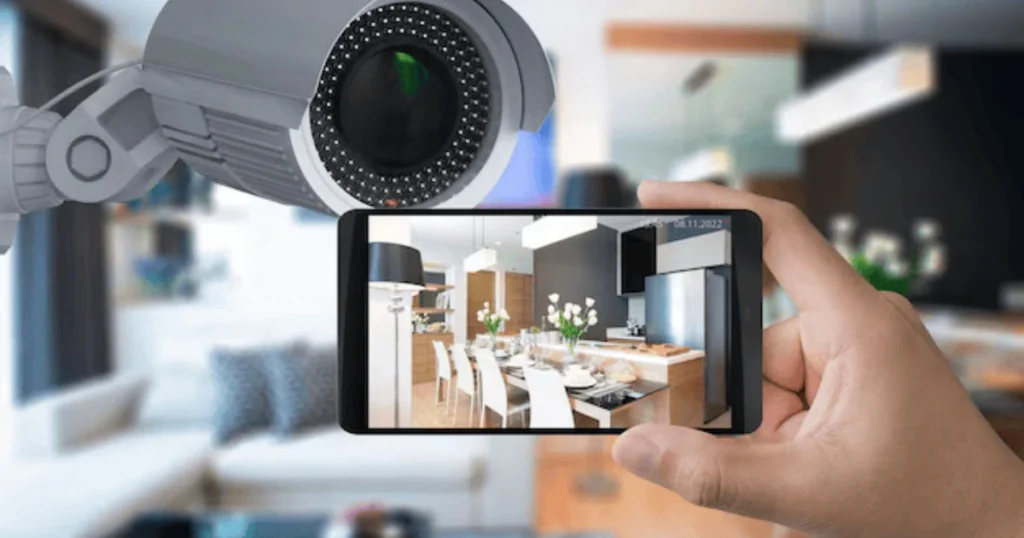
Video remote surveillance of shopping centers will allow specific leaders to access videos from their respective centers both in real-time and recording forms using commercial security cameras without being physically present at the location.This will be especially helpful in cases where they are responsible for handling more than one center or shopping centers because they will need:
- The capability to access critical cameras remotely when required.
- The capability to download clips rapidly as required by the tenants, the investigator, or the insurance agency.
- The capability to monitor the status of the system and the utilization of storage space.
Remote Video Surveillance at Shopping Centers

The use of video surveillance at shopping centers will give certain individuals the ability to view videos taken within their respective shopping centers either in live form or recorded form without necessarily visiting the shopping center.
Experience and Reputation in the Industry
Proven expertise across OHZ industries ensures reliable deployment in complex, multi-tenant environments.Make sure that all previous experiences, responses, uptime, and working relations with tenants and security have been checked for consistent and quality performance.
- Check for any previous installations in shopping centers/malls similar in size and complexity to your own.
- Look for references and ask for information regarding their responses and uptime.
- Make sure that they are familiar with multiple tenants and coordination within malls.
Range of Services Offered
Based on your requirements, one or more of the following services can be offered by a service provider:
Site surveying and system designing: Camera placement optimization, network architecture design, data storage calculations, and operational monitoring workflows.
Installation and set up: All field equipment deployment, low-voltage wiring, and system commissioning should be performed by a licensed low-voltage electrical contractor registered with the New Jersey Division of Consumer Affairs to ensure full compliance with the State’s Fire Alarm, Burglar Alarm, and Locksmith Advisory Committee regulations.
Live Monitoring and Response: Continuous monitoring of live video streams, real-time event verification, active threat mitigation, and structured incident reporting.
Cybersecurity and Access Control: Implementation of encrypted data streams, multi-factor authentication, network segmentation, and physical access tiering.
Maintenance Services: Routine diagnostic health checks, preventative lens cleaning, camera re-focusing, and regular firmware patch deployments.
Customer Support and Maintenance Services
If there is no proactive maintenance of surveillance systems, they will silently fail. Here’s what you must demand from your service providers:
- Health Checks : Alerts for camera outages, storage issues, and missing videos.
- Preventative maintenance: Clean camera lenses, firmware updates, and coverage checks.
- Service-level agreements (SLAs): Time for repairs and escalation processes.
- Documentation: Camera locations, asset listing, credentials, etc.
Cost Factors to Consider
Total cost of ownership should be taken into account during the cost planning stage rather than just calculating the upfront equipment cost. Video surveillance in shopping centers is another factor that might influence budget planning.
Budgeting Shopping Center Video Surveillance
Typical cost areas include:
- Hardware: cameras, mounting systems, camera housings, network switches, uninterruptible power supplies (UPS), and intercom systems if necessary.
- Infrastructure: cabling, fiber optics installations, wireless bridges, improved illumination, and network segmentation.
- Recording: on-site NVR units or cloud storage solutions.
- Software: software license fees, software modules, software analytics capabilities, number of users, etc.
- Operations: monitoring fees, guard services, and training.
- Surveillance system maintenance: break/fix repairs, replacements, and periodic re-commissioning.
Cost Versus Benefits Security Solution
As far as the benefits are concerned, relate your proposals to the following results:
Reduced risks: lower chances of shrinkage and vandalism cases.
Greater security: quick response, reduced frequency, high renter retention ratio.
Efficiency improvements: less guards’ visits at some sites, more effective investigations, proper documentation.
- Liability management: clearer evidence for disputes and claims.
Ask the supplier to provide you with proof regarding how its solution will help achieve the above results.
Selection of Final Solution
Choose the solution whose implementation most closely aligns with your requirements, not the one with more features.
Comparison of Proposals Provided by Various Suppliers
Check each proposal for specifics about camera schedule, coverage, storage terms, and procedure to respond to events.
Compare the proposals according to: camera quantity, storage time period, analytics capabilities, warranties, SLAs, and cost per month.
Identify any ownership problems regarding who owns video footage, who has access to download video footage, and how it is done.
Site Visits and Demonstration
If feasible, set up a pilot program with implementation in a high-risk location, which will be one parking area and one main entrance. Check:
Operation of cameras at night and resistance to glare
Quality of downloaded video footage and rate of data downloading
Effectiveness of alerts (when utilizing analytics)
Procedure of operator in response to event
Full Coverage & Monitoring Remotely
Coverage relates to reliability. The most effective surveillance security system for your shopping mall ensures that important locations are monitored, recorded, reviewed, and also plans the course of action for real-time intervention.
24/7 Monitoring of All Areas
Not all of it necessarily needs live eyes monitoring constantly, but important areas must be reliably recorded, analyzed, and reviewed instantly whenever necessary. Some examples are:
- Constant recording of entrances/exits, hallways, and trouble zones
- Alerts generated due to certain events (loitering, intrusion, crowded spaces) through analytics
- Coordination for patrolling, making patrol personnel aware of their purpose
Integration With Other Security Systems
Integration can help increase the quality of responses. Integration may involve:
- Access control: video tied to events such as force door and prop door.
- Intruder alarm system: video verification prior to dispatch.
- Intercoms/speakers: for two-way conversations and active voice-down deterrence in secured locations.
- Incident Management: consistent incident reporting, numbering, and documentation.
Live Security Camera Surveillance in Shopping Centers Accessible From Anywhere
Live shopping center security camera surveillance provides useful access to the manager;
however, it requires safeguards:
- Apply multi-factor authentication and role-based authorization (principle of least privilege).
- Ensure audit logs, and implement policies around sharing and downloading clips.
- Employ encryption and maintain isolation of the security network from tenant/visitor Wi-Fi networks.
Importance of Shopping Mall Security Knowledge
Mall surveillance plays an important role in providing a safe shopping experience to shoppers, businesses, and employees within the premises. Mall surveillance also assists in managing visibility and operations while reducing expenses caused by theft, vandalism, and litigation.
Security System Functions in Malls
- Deterrent: presence of cameras and warning signs prevents crimes.
- Detection: detection identifies problems early.
- Response: accurate information leads to an appropriate response.
- Investigation: video footage accelerates investigation and prosecution.
Elements of a Good Security System
It generally includes the following elements:
- Cameras placed in accordance with the threat assessment and footfall analysis
- Recording that is consistent and has adequate retention and backup storage
- Procedures for monitoring and escalating issues
- Access control and handling of the evidence
- Regular maintenance and security system evaluation
Putting Together a Security System
The implementation stage is crucial for success. Think of implementation as part of operations and not as installation.
Converting Assessment into Action Plan
Make your assessment actionable:
- Identify top 510 threats and their corresponding physical locations.
- Develop guidelines on how each threat is managed (responsibility, reporting, and involvement of law enforcement).
- Set KPIs for the system (camera availability, compliance with retention policy, responsiveness, and incident resolution quality).
Choosing the Right Security Equipment
When selecting shopping center video camera security equipment, insist on practical performance:
- Image clarity at the times and lighting conditions you actually have (not just daytime demos).
- Storage sized for your camera count, resolution, frame rate, and retention requirements.
- Cybersecurity features: signed firmware, strong authentication, and ongoing patching support.
- Compatibility with your preferred VMS and future expansion plans.
Installation and Maintenance of Security Systems
Commissioning should include verification tests: camera views, night checks, export tests, and failover checks. After installation, surveillance system maintenance should be scheduled and tracked, including:
- Monthly system health checks and offline camera remediation
- Quarterly lens cleaning and focus checks for critical cameras
- Regular firmware updates and password/access reviews
- Annual coverage review to account for tenant build-outs and changing traffic
The Future of Shopping Mall Security Systems
Security technology is evolving quickly, and shopping center security solutions should be designed for upgrades rather than replacement.
Technological Advancements in Security Systems
- Cloud and hybrid recording: easier remote management and scalability.
- Smarter analytics: better detection with fewer nuisance alerts.
- Health monitoring: automated detection of camera tampering, obstructions, and recording gaps.
- Improved integrations: tighter workflows between video, access, and incident reporting.
The Impact of AI and Machine Learning on Security
AI can support operators by surfacing the moments that matter-for example, loitering after hours, perimeter intrusion, or sudden crowding. To use AI responsibly:
- Test in a limited zone first and measure alert quality.
- Define escalation rules so analytics assist, not overwhelm, your team.
- Review privacy and bias considerations and keep humans in the decision loop.
Legal and Ethical Considerations for Mall Security
In the United States, surveillance in public and semi-public commercial spaces is common, but policies and practices still matter. Your approach should balance safety, privacy, and transparency.
Privacy Concerns in Public Spaces
- Use clear signage that indicates surveillance is in use.
- Avoid placing cameras in areas where privacy is expected (such as restrooms or into private changing areas).
- Limit access to footage to trained, authorized personnel.
- Set retention rules and delete footage according to policy unless needed for an active case.
Compliance with Local and National Security Regulations
Requirements can vary by state and locality (and by the nature of your tenants). Work with qualified counsel and your security provider to align policies on retention, access, audio recording (if used), signage, and evidence handling.
Conclusion
The right shopping center surveillance security solution starts with a clear understanding of risks and requirements across retail and commercial environments, then pairs the right camera coverage with dependable recording, monitoring, and maintenance.
- Carefully evaluate providers and plan long-term operations to implement scalable shopping center video surveillance in retail and commercial settings.
- Improve safety, reduce loss, and deliver measurable value through a well-designed, scalable surveillance program.

Security content creator with OHZ Remote Guarding, focusing on advanced asset protection strategies during extended business closures and seasonal risks.