Robbery, vandalism, and tampering have always been major threats to retail establishments, construction sites, storage units, offices, automotive dealerships, and other commercial facilities. Modern video monitoring and security camera monitoring systems help not only record incidents but also create an effective surveillance ecosystem that improves site security monitoring, deters criminal activity, identifies suspicious behavior, and enables rapid response during emergencies.
Today, businesses increasingly rely on remote video monitoring services and advanced live video monitoring solutions to enhance protection without the need for constant on-site personnel. These systems are often integrated with intelligent video analytics, allowing real-time detection of unusual activity and reducing false alarms.
In sectors like construction and automotive retail, solutions such as construction site security systems and automotive dealership remote video surveillance are widely used to secure high-value assets and open environments. Similarly, remote guarding services combine live surveillance with virtual intervention, making security more proactive and cost-effective.
Overview of surveillance technologies
The modern camera system consists of four major elements:
- Cameras: stationary cameras, pan-tilt-zoom cameras, thermal cameras, and specialized cameras for low light and wide areas. Most companies use a combination of indoor and outdoor cameras to provide continuous monitoring.
- Video Recording and Storage: network video recorders, direct video recorders, cloud storage, and hybrid systems that compromise between budget, storage, and redundancy requirements.
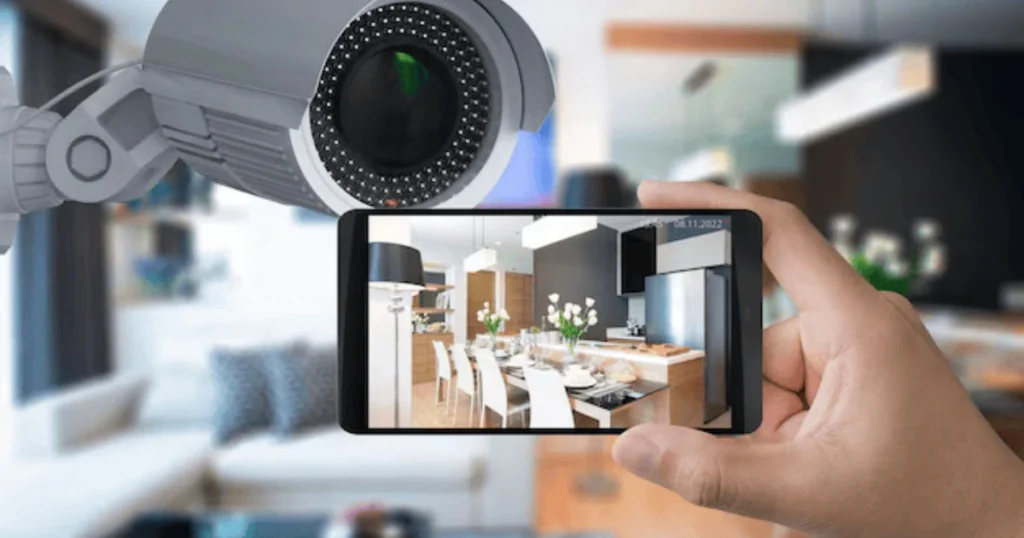
- Video Viewing and Alerts: mobile applications, web interfaces, and on premises screens that convert video footage into valuable data. Here comes the intersection between home security cameras with monitor and corporate solutions both depend on a camera monitor system.
- Monitoring and Response: self-monitoring conducted by employees and professional surveillance performed by a remote video monitoring service. Companies typically begin with basic cameras and recording devices, while adding advanced monitoring capabilities later on.
The evolution of video surveillance monitoring
Early closed-circuit television was more focused on recording. There was evidence in the event of something happening, but there was little ability to see things in real-time, and someone had to be constantly watching the screen.
Technological advances
Modern closed-circuit television can:
- Provide access remotely via cellphones and computers
- Provide real-time video surveillance, along with event-based alerts
- Perform advanced detection such as motion zones, line crossing, and loitering
Offer cloud or hybrid storage options
Therefore, a remote video surveillance system might offer sufficient coverage without the need for a dedicated security guard or someone to watch the screen from the back room.
Understanding different types of monitoring
Monitored by camera: what it means
When a site is monitored by camera, live video is actively watched or assessed (by a person, by software, or both) to identify security events as they happen. In practice, this usually falls into one of these models:
Self-monitored: your team checks live feeds and reviews footage when something seems off.
Event-monitored: cameras generate alerts (for motion, intrusion, or analytics triggers) and someone reviews those alerts.
Professionally monitored: a monitoring center provides live review and response coordination as part of a video surveillance monitoring service.
The best option depends on your risk profile, operating hours, staffing, and how quickly you need to intervene during an incident.
Remote video monitoring services
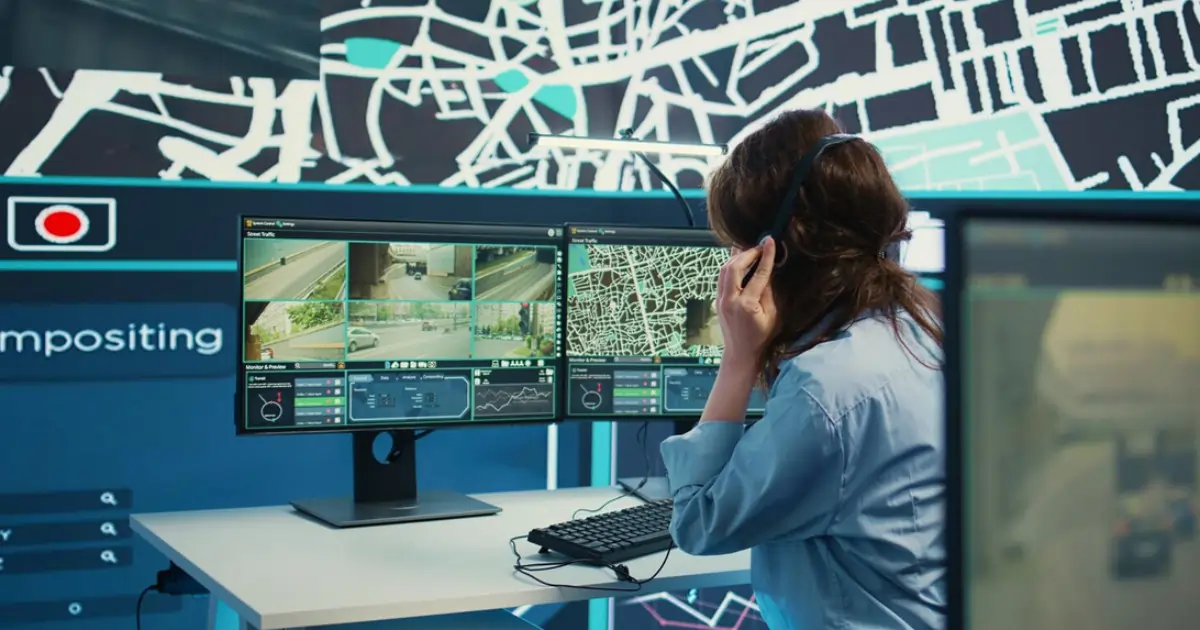
A remote video monitoring system connects your cameras to off-site operators who provide continuous video monitoring and real-time response support. Through live video monitoring and remote security monitoring services, trained professionals can:
- Review triggered events or scheduled check-ins
- Verify whether an alarm is legitimate using intelligent video analytics
- Escalate to on-site personnel, private security, or law enforcement when appropriate as part of remote guarding services
- Document incidents and support investigations with organized clips, timelines, and security camera monitoring records
These systems often integrate intelligent video surveillance, helping reduce false alarms while improving response accuracy and efficiency.
This approach is especially valuable for after-hours risks, multi-location businesses, and high-risk environments such as construction yards and industrial sites where theft or vandalism can occur quickly. In these cases, construction site security systems and mobile surveillance units provide scalable protection without requiring constant on-site guards.
For industries like automotive retail, similar solutions such as automotive dealership remote video surveillance help protect inventory and large outdoor lots through proactive monitoring and rapid escalation.
Advantages of being monitored by camera
Video Monitoring Services
If you lack the personnel to monitor cameras around-the-clock, remote monitoring can be used to fill the void. You won’t need anyone to “check the feed” since you will develop processes around certain trigger events such as a door being forcibly breached, movement near high-value assets, or vehicle access to sensitive areas.
Centralized monitoring can provide a number of advantages for those who use the remote surveillance camera system. These will help standardize the security protocols and better recognize any patterns and respond appropriately.
Real-time Surveillance Services
In terms of speed and context, real-time surveillance is what gives you an upper hand. While receiving alerts can be helpful, video surveillance in real-time enables you to see what is going on and act appropriately immediately.
The following list includes some common uses of real-time monitoring services:
- Faster verification: whether it’s a threat or just another false alarm
- Improved situational awareness: where and what a person is doing at your location
- Safer responses: no unnecessary confrontations due to protocol
The role of AI in security
AI home security systems (and how businesses can learn from them)
Home AI security systems have brought in new-age alert capabilities like person detection, package detection, and activity zones. The same applies to businesses, where these elements can help in filtering out unwanted alerts caused by wind, shadows, headlights, and animals.
While you may have the objective of preventing commercial theft, technologies like two-way audio, spotlight illumination, and push notifications can be useful even for small businesses like office buildings, clinics, and retail stores.
Advanced detection in video surveillance
Using video surveillance detection and analytics using AI can enable more efficient surveillance systems by highlighting risky activities, such as:
Staying near entrances, loading docks, or enclosed premises
- Crossing line barriers in restricted areas
- Movement after business hours
- Strange vehicle behavior in parking lots and drive lanes
Comparing different surveillance options
Monitored CCTV security vs. standard cameras
Standard cameras are primarily reactive: they provide evidence. Monitored CCTV security can be proactive: it supports earlier detection and response. The biggest differences usually come down to:
Timing: do you learn about an incident minutes later—or while it’s unfolding?
Verification: can you confirm what triggered an alarm quickly?
Follow-through: is there a defined escalation path, or does someone have to improvise?
Benefits of a remote video surveillance system
A remote video surveillance system can help you cover more ground without adding headcount, particularly when paired with a well-configured automated camera system (alerts, analytics, and schedules).
Businesses often choose remote monitoring for:
After-hours and weekend coverage
Multi-site visibility under one dashboard
Higher-risk areas (cash handling, inventory cages, loading docks)
Construction and temporary locations
The advantages of a security video monitoring system
Historical perspective
The first CCTV systems were mainly concerned with recording purposes. They offered proof in case of an occurrence, but they had little real-time visibility and needed someone to keep monitoring the screen all the time.
Technological advancements
Today’s systems may enable:
- Access remotely using phones and computers
- Real-time video surveillance with alerts based on events
- Sophisticated detection (motion zones, line crossing, loitering)
Cloud and hybrid storage solutions
This means that a remote video surveillance system may provide adequate coverage without having to hire a full-time security officer or station someone in a back room.
TMA Five Diamond Certification is a recognized industry standard that highlights excellence in security monitoring center operations. It ensures that monitoring teams are properly trained, follow strict operational procedures, and maintain high standards for accuracy and response. This certification focuses on reducing false alarms, improving emergency response handling, and ensuring consistent quality in monitoring services. For businesses using video security monitoring systems, TMA Five Diamond Certification provides added assurance that their security alerts and incidents are being managed by highly trained professionals who follow proven best practices for reliability and safety.
Steps to establish a video surveillance monitoring service
1) Understand your business security requirements
Begin by creating a basic risk mapping:
- Assets: What do you need to protect? (inventory, equipment, data, money, cars)
- Threats: theft, shrinkage, vandalism, trespassing, burglary, or other incidents
- Hot spots: Entrances/exits, loading docks, back gates, storages, parking area
- Critical times: High-risk time periods (closing hours, overnight, weekend)
2) Camera monitoring design
Successful surveillance requires having high-quality video footage. You need:
- Correct height and angle setting for all cameras for clear face and motion capturing
- Proper lighting to minimize glare and shadows
- Monitoring approach zones (and not only the entry door)
- Redundancy on hot spots by covering the same location from two angles
3) Pick a suitable monitoring scheme
Based on your needs and requirements decide if you have:
- On-site monitoring (camera monitor system installed on-premises)
- Hybrid monitoring (during business hours – staff surveillance + after-hours remote monitoring)
- Remote monitoring (good option for multi-location facilities)
4) Automate alerts and camera systems
Good configured automated camera surveillance system minimizes false alarms. Typical options are:
- Scheduling: different rules for after-hours vs business hours
- Zone definitions and ignore area definition (trees, streets, glass)
- Triggers for different types of alerts (motion, line crossing, etc.)
- Escalation rules: priority order of who gets notifications
5) Incorporate camera monitoring into daily routines
For you to make full use of surveillance through monitoring, operationalize the process:
- Develop response scripts for typical occurrences
- Ensure that managers know how to analyze videos and download evidence
- Check the status of the camera (non-operating cameras, dirty lenses, blocked cameras)
- Evaluate incidents on a monthly basis to adjust placement and alerts
- This will turn cameras into a system of video surveillance and monitoring.
Certified excellence for your peace of mind
If you’re considering professional monitoring, look for signs of strong operational standards: documented procedures, operator training, redundancy, and transparent reporting.
In order to make sure that your processes in asset protection are carried out with extreme precision, it becomes extremely important for you to be certain about whether or not your security company is made up of operational elites. Assessing the level of compliance of centers through the The Monitoring Association Five Diamond Designation Program makes sure that the center follows the toughest standards in North America.
TMA Five Diamond (what it is and why it matters)
TMA’s Five Diamond designation is a well-known recognition in the monitoring industry, generally associated with enhanced training, quality assurance, and operational practices. If you evaluate a remote video monitoring service, ask whether their monitoring center holds recognized certifications and what those standards mean in practical terms: staffing coverage, escalation protocols, and how they handle verified events.
In addition, check whether the provider holds OHZ certification and tma five diamond certification, and how that certification translates into real-world monitoring standards such as operator competency, incident verification accuracy, and compliance with documented response procedures.
Case examples on theft prevention
Every site is different, but the following examples illustrate how monitored systems can change outcomes. (Use these as planning patterns rather than guarantees.)
Example 1: Retail back-door risk after closing
A small retailer experiences repeated after-hours attempts at the rear entrance. With monitored by camera coverage focused on the approach path and door hardware, alerts are triggered when someone loiters near the entrance. Real-time review confirms suspicious activity, and escalation procedures notify the manager and security response. The business also improves lighting and signage to increase deterrence.
Example 2: Construction site tool theft
Job sites are common targets for quick “grab-and-go” theft. A remote video monitoring system paired with analytics (line crossing into fenced zones) helps identify intrusions earlier. Live video surveillance enables rapid verification and documentation, supporting faster response and better incident records for internal reporting.
Example 3: Warehouse shrink and unauthorized access
A warehouse adds cameras at dock doors, inventory cages, and high-value aisles. Instead of trying to watch everything, the team uses event-driven alerts and periodic checks. Better coverage and consistent review reduce blind spots and provide clearer accountability for access to sensitive areas.
Conclusion
Being monitored by camera is more than recording—it’s about timely detection, verification, and response.
Video surveillance monitoring can reduce false alarms, increase deterrence, and improve incident documentation.
AI-powered alerts and rules-based automation can help you focus attention where it matters most.
If you’re evaluating upgrades, start by identifying your highest-risk areas and deciding whether you need self-monitoring, hybrid coverage, or a professional video surveillance monitoring service. From there, build a plan for camera placement, alert rules, and response procedures so your system protects your business when it matters most.

Security content creator with OHZ Remote Guarding, focusing on advanced asset protection strategies during extended business closures and seasonal risks.