Beyond the Obvious: Rare Stats on Remote Monitoring in Urban Areas
Urban environments present unique challenges in the security landscape. The dense population, complex infrastructure, and heightened criminal activity make urban areas high-risk zones for theft, vandalism, and violence. Remote monitoring has emerged as a crucial tool for securing businesses, residential complexes, and public spaces in cities. However, many rare and lesser-known facts about the of remote monitoring cost-efficiency remain unheard of.
In this detailed blog, we will explore the rare statistics surrounding remote guarding in urban areas. Backed by real-world case studies and insights into how this technology is reshaping the way we approach urban security.
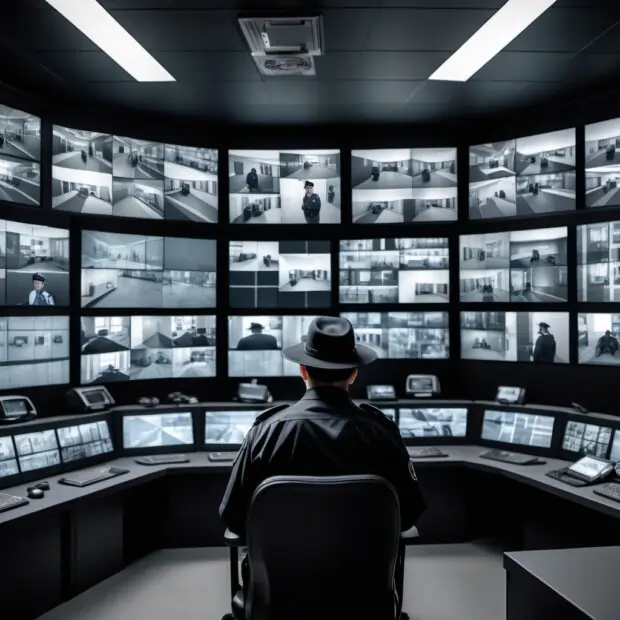
Urban environments are becoming more complex and high-risk. From after-hours break-ins to organized retail crime and trespassing, businesses are facing increasing pressure to strengthen their security. Many properties already rely on on-site guards—but here’s the reality: guards alone cannot provide full coverage.
That’s why more businesses are adopting a hybrid approach—remote guarding security combined with on-site guards—to close gaps, improve response times, and significantly boost prevention rates. Instead of replacing guards, remote guarding services enhance their effectiveness, creating a smarter and more resilient security strategy.
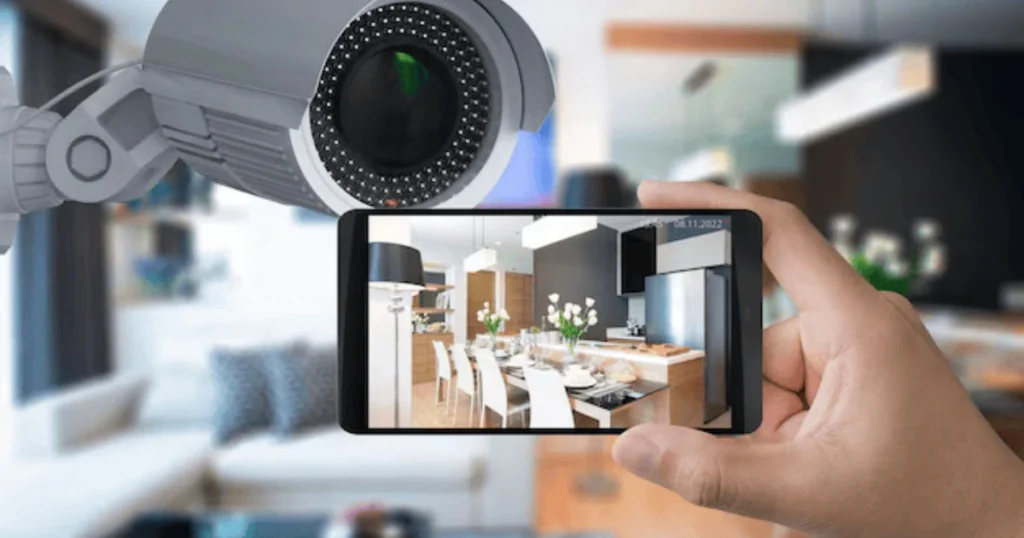
With advanced remote guard monitoring, security teams can actively observe multiple locations in real time, detect threats earlier, and intervene before incidents escalate. This layered approach ensures stronger protection compared to traditional guard-only systems.

The Growing Need for Remote Monitoring in Urban Areas
Urban areas, especially large cities, are increasingly becoming the focus of security concerns. In fact, a report from the UN Office on Drugs and Crime highlights that over 55% of the world’s population resides in urban areas, and this figure is expected to reach 68% by 2050. With urbanization comes the challenge of securing larger populations, more businesses, and highly congested environments. Traditional on-site security is often inadequate for tackling these challenges.
According to Allied Market Research, the global video surveillance market, which is a key component of remote monitoring, is projected to reach $144.85 billion by 2027, with a significant chunk of that growth driven by urban security needs. As cities continue to grow, the need for scalable and technologically advanced security solutions becomes apparent.
Key Statistics: The Efficacy of Remote monitoring in Urban Settings
- Crime Reduction in Urban Areas: A study conducted by Verkada found that properties in high-crime urban areas using remote monitoring systems experienced a 65% reduction in burglaries within the first year of implementation. This substantial decrease attributes to the deterrence factor provided by visible camera systems, alongside real-time human intervention.
- Cost-Efficiency: Urban businesses that have transitioned from traditional on-site guards to remote monitoring solutions have reported significant cost savings. A report from McKinsey & Company estimates that businesses save 40-60% on their annual security budgets by employing remote monitoring services, mainly due to reduced manpower costs and more efficient coverage of large areas.

3. Improved Response Times: In urban settings where law enforcement can be overstretched, remote guarding provides an advantage by cutting down response times. Data from Stealth Monitoring shows that remote guarding systems have improved response times by 30% on average, particularly in crowded metropolitan areas where dispatch and deployment of physical security forces might be delayed.
4. Increased Surveillance Coverage: A survey conducted by Urban Security Magazine revealed that remote guarding solutions increase surveillance coverage by 50%, allowing for more areas to be monitored simultaneously without requiring additional physical infrastructure. This is especially crucial in urban environments where buildings are multi-story and security threats could emerge from multiple access points.
The Evolution of Remote Monitoring Technology
Remote monitoring systems have evolved to meet the demands of urban security, incorporating AI-powered cameras, real-time analytics, and advanced monitoring solutions. These technologies offer several benefits over traditional on-site guards, making them particularly effective in urban environments.
AI-Driven Analytics: Artificial Intelligence plays a pivotal role in detecting anomalies in urban surveillance footage. With the help of AI, remote guarding systems can flag unusual behavior such as loitering, trespassing, or attempted break-ins. A study by IHS Markit shows that 80% of surveillance cameras installed in urban areas are now equipped with some form of AI, allowing for real-time analytics and automatic alerts. The ability of AI to continuously analyze large amounts of footage is particularly advantageous in cities, where the volume of data to process is exponentially larger than in rural or suburban areas.

Integrated Access Control: Remote monitoring solutions are increasingly being integrated with access control systems, enabling businesses and residential complexes to manage who enters and exits their premises. In urban areas, this functionality is critical for high-traffic buildings like shopping centers, office complexes, and apartment buildings.
Hidden Costs of Traditional Security in Urban Areas
Traditional security measures, such as deploying physical guards in urban areas, come with several hidden costs that remote monitoring systems can effectively mitigate.
- Labor Costs: Hiring, training, and maintaining a team of security guards is significantly more expensive in urban areas due to the high cost of living and demand for skilled labor. According to the Bureau of Labor Statistics, the average hourly wage for a security guard in major U.S. cities is $17.31, which translates to annual costs of over $36,000 per guard. In contrast, remote monitoring solutions eliminate the need for round-the-clock personnel, offering a more cost-effective solution.
- Inconsistent Coverage: Physical security guards, while useful in certain situations, are limited by human error and fatigue. Studies have shown that physical guards can only effectively monitor a small area at a time. Remote monitoring, with its 24/7 surveillance capabilities, ensures continuous coverage and minimizes gaps in security.
Real-Life Examples: The Impact of Remote Monitoring in Urban Areas
Example 1: Office Complex in San Francisco
An office complex in downtown San Francisco faced repeated incidents of unauthorized access and vandalism, particularly during off-peak hours. The management team initially employed a rotating team of physical guards, but costs were soaring, and incidents persisted.
After implementing a remote monitoring solution with AI-driven cameras, the office complex saw a 60% decrease in security breaches. The remote guards can monitor all entrances and dispatch local law enforcement if there is a breach. Moreover, the system reduced the need for multiple guards, saving the company an estimated $100,000 annually in labor costs.
Example 2: Residential Building in Chicago
A high-rise residential building in Chicago’s Loop district experienced frequent issues with trespassers accessing restricted areas. Despite having on-site security guards, the building continued to face these challenges, especially during late-night hours.
After transitioning to a remote monitoring solution, the building’s management noticed an 80% reduction in trespassing incidents. The new motion-detection cameras and 24/7 live monitoring ensure that any unauthorized access is detected and addressed immediately.
Metrics That Matter: How Remote Monitoring Measures Up in Urban Areas
- Crime Prevention Rate: Urban areas using remote monitoring systems have seen an average crime reduction of 50-70%, as reported by Security Magazine. This rate varies depending on the specific location and industry, but the deterrent effect of surveillance is evident across sectors.
- Cost Efficiency: Businesses in urban areas save an average of 40-50% on security expenses by switching to remote guarding.
- Response Times: Remote monitoring systems reduce response times by up to 30%, thanks to immediate notification systems that alert both property owners and local law enforcement simultaneously.
- Improved Monitoring Capabilities: Remote monitoring systems increase surveillance coverage by 45%, making it easier to monitor complex urban buildings.
Guard and Remote Coverage Reality Matrix
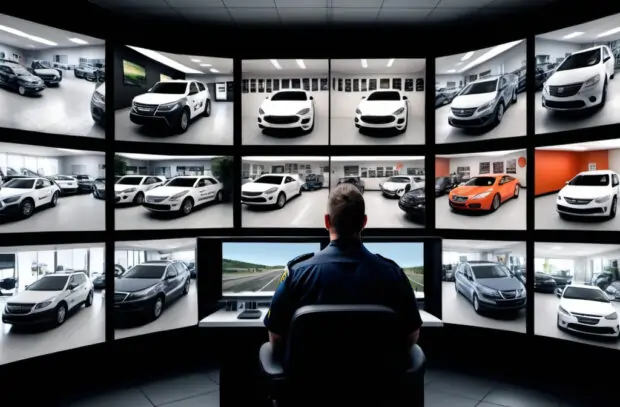
When you compare traditional security methods to a hybrid model (Guard + Remote Monitoring), the performance gap becomes impossible to ignore.
Coverage & Performance Comparison
| Time / Location | Guard Alone | CCTV Alone | Guard + Remote |
|---|---|---|---|
| Day Shift | 85% coverage | 65% coverage | 100% coverage |
| Night Shift | 42% effectiveness (fatigue) | 65% coverage | 97% coverage |
| Blind Spots | 65% unmonitored | 35% gaps | 0% gaps |
| Response Time | ~8 minutes | None | ~28 seconds |
| Annual Cost | $429K | $85K | +$38K (add-on) |
What This Means for Your Business
Even highly trained guards can only cover limited areas at a time, leaving large portions of your property exposed—especially during night hours.
CCTV alone improves visibility, but without active monitoring, it cannot respond or prevent incidents.
The hybrid model changes everything:
- Eliminates the 65% visibility gap created by patrol-based security
- Delivers near-complete coverage across all shifts
- Reduces response time from minutes to seconds
- Adds powerful protection for a fraction of guard costs
The Real Advantage
Remote guarding doesn’t replace guards—it amplifies their effectiveness.
- Guards handle physical presence and intervention
- Remote systems provide continuous monitoring and instant detection
Together, they create a true 24/7 protection model with no gaps.
28 Second Hybrid Response Protocol
The true power of modern security comes from combining on-site guards with AI-driven remote monitoring. This hybrid model delivers both visible deterrence and instant response, eliminating the gaps that exist in traditional security.
How the Hybrid Model Works
- On-Site Guards:
Provide physical presence and deterrence
➝ ~58% incident prevention - Remote AI + Monitoring:
Detects anomalies in real time and covers blind spots
➝ Up to 97% detection accuracy
The hybrid security model works by combining the strengths of on-site guards and remote AI monitoring to deliver more effective protection. On-site guards provide a visible physical presence that acts as a strong deterrent, helping prevent approximately 58% of incidents. Complementing this, remote AI and monitoring systems continuously analyze activity in real time, identifying anomalies and covering blind spots that guards might miss, achieving up to 97% detection accuracy. Together, this integrated approach creates a more comprehensive and responsive security system.
Real-Time Response Timeline
0–3 seconds:
AI detects suspicious activity (intrusion, loitering, unauthorized access)
3–12 seconds:
Remote monitoring team verifies the threat using live video feeds
12–28 seconds:
- Live audio warning issued to the intruder
- On-site guard is instantly notified and dispatched
The real-time response timeline in a hybrid security model is designed for speed and precision. Within the first 0–3 seconds, AI detects suspicious activity such as intrusion, loitering, or unauthorized access. Between 3–12 seconds, the remote monitoring team quickly verifies the threat using live video feeds. By 12–28 seconds, immediate action is taken— a live audio warning is issued to the intruder while the on-site guard is instantly notified and dispatched, ensuring a rapid and coordinated response to prevent escalation.
The Result
- Up to 95% incident prevention
- Immediate threat disruption before escalation
- Faster coordination between remote teams and on-site guards
Compared to relying on guards alone, which prevent around 58% of incidents, the hybrid model significantly enhances outcomes by combining human presence with advanced AI monitoring, resulting in faster detection, quicker response, and much higher overall threat prevention.
Real-World Example: Urban High-Rise
At 2:17 AM, during a brief gap in patrol:
- AI detects movement in a restricted stairwell
- Remote operator verifies and issues a live audio warning
- Intruder hesitates and retreats immediately
- On-site guard arrives within 90 seconds
Outcome:
- Incident prevented with zero loss
- 80% reduction in trespassing incidents over time
In a real-world example from an urban high-rise, the effectiveness of the hybrid model becomes clear. At 2:17 AM, during a brief gap in patrol, AI detected movement in a restricted stairwell. A remote operator quickly verified the situation through live video and issued an immediate audio warning, prompting the intruder to hesitate and retreat. Shortly after, the on-site guard arrived within 90 seconds to secure the area. The outcome was a successfully prevented incident with zero loss, contributing over time to an 80% reduction in trespassing incidents.
Why Hybrid Security Wins
- Eliminates blind spots and patrol gaps
- Ensures instant detection + physical response
- Maintains continuous protection—even during guard downtime
Hybrid security stands out because it eliminates blind spots and gaps in patrol coverage, ensuring that no area goes unmonitored. By combining AI-driven surveillance with on-site guards, it enables instant detection of suspicious activity along with a rapid physical response. This integrated approach also maintains continuous protection at all times, even during moments when guards are unavailable or temporarily away, resulting in a more reliable and resilient security system.
Real Time Guard Support Dashboard
Remote guarding does not replace security guards; instead, it enhances their effectiveness by providing better tools and real-time intelligence. By integrating AI monitoring and live remote support, guards gain improved situational awareness, allowing them to respond more quickly and with greater accuracy to potential threats.
Key Features of the Dashboard
Live Camera Feeds for Instant Monitoring
The system streams live camera feeds directly to guards’ devices, enabling them to monitor locations in real time. As a result, guards receive immediate visual information without delays, improving situational awareness and allowing for faster, more informed decision-making.
AI-Driven Priority Alerts
The platform uses AI to automatically detect and highlight urgent events in real time. In addition, it generates priority alerts that are sent instantly, enabling immediate action and ensuring that critical situations are addressed without delay.
Manager Dashboard for Full Oversight
Managers can view all activities through a centralized dashboard that provides a complete overview of operations. At the same time, they receive real-time updates, allowing for better situational control, faster decision-making, and improved oversight of ongoing security events.
Incident Tracking and Performance Analytics
The system automatically records all incidents as they occur, creating a detailed log for review and accountability. In addition, it tracks performance metrics over time, helping to identify patterns and improve the quality and effectiveness of future responses.
Impact on Security Performance
The dashboard improves guard efficiency by providing real-time visibility, alerts, and centralized control over security operations. As a result, response accuracy and overall performance increase significantly, improving from around 58% in traditional setups to up to 95% in a hybrid, technology-assisted model.
Conclusion: The Future of Remote Monitoring in Urban Areas
Remote guarding is not just a trend—it’s a necessity in today’s urban security landscape. As businesses in urban areas face increasing security threats, the importance of technology-driven solutions like remote monitoring becomes clear. From reducing crime to cutting costs, remote monitoring is transforming the way we secure our urban spaces.
With AI integration and access control systems, remote monitoring solutions continue to evolve, offering greater protection for urban areas. The case studies presented in this blog demonstrate that the benefits of remote monitoring go far beyond the obvious. Explore our full range of services at OHZ Remote Guarding.
FAQs
Why remote guarding if I have on-site guards?
Remote monitoring acts as a “second layer” that catches blind spots, idle time, and off-camera areas guards can’t continuously watch.
Remote monitoring + guards cost impact?
Usually a moderate add-on that can reduce need for extra guards or overtime, so total security cost often stabilizes or slightly increases for higher coverage.
Do guards become more effective with remote?
Guards are able to respond more quickly when alerts, analytics, and live camera tracking direct them to verified incidents rather than relying solely on routine patrols. This targeted approach reduces guesswork, improves situational awareness, and ensures that attention is focused on real threats, leading to faster and more effective responses.
Night shift guard performance improvement?
Remote monitoring systems help reduce missed incidents caused by fatigue, distraction, or low visibility by maintaining continuous surveillance, especially during low-alert hours such as nights or shift changes. By actively analyzing live feeds and flagging anomalies in real time, they ensure that suspicious activity is detected and escalated even when on-site attention may be reduced.
Guard safety enhanced by remote monitoring?
Remote audio warnings combined with early AI-based detection can deter intruders before any physical engagement is required from on-site guards. By identifying suspicious activity quickly and issuing immediate live warnings, the system often interrupts intent early, reducing escalation and giving guards time to respond in a controlled and informed manner.
Multi-building guard coordination?
A central dashboard can prioritize incidents across multiple sites by analyzing alerts in real time and ranking them based on urgency and severity.
Legal liability reduction with remote + guards?
The system supports post-incident analysis through recorded video evidence, detailed incident logs, and clearly defined escalation trails. This improves transparency and accountability, and it is especially useful for insurance claims, compliance checks, and resolving disputes by providing verifiable documentation of events.
Guard training for remote integration?
Training requirements are typically minimal, usually limited to basic instruction on using the app or dashboard for viewing alerts, accessing camera feeds, and following response protocols.
Urban parking garage coverage improvement?
Combining guards + AI video monitoring improves detection of theft, trespassing, and vehicle issues compared to guards alone.
ROI timeline for hybrid security?
Depends on site size, but savings typically come from reduced overtime, fewer incidents, and optimized staffing—not a fixed timeline.

Security content creator with OHZ Remote Guarding, focusing on advanced asset protection strategies during extended business closures and seasonal risks.