Exploring facial recognition and video monitoring
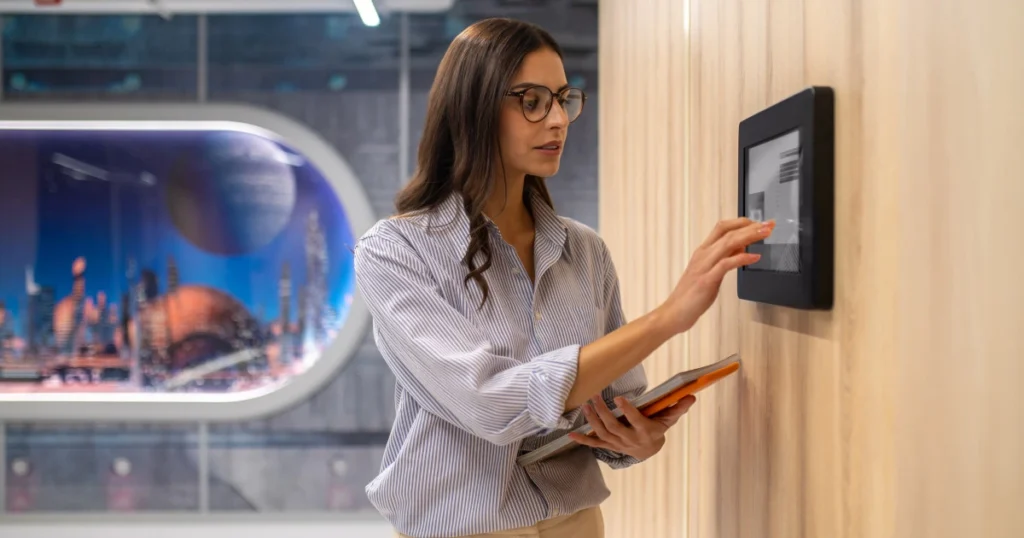
Traditional keycards and access codes are becoming obsolete. OHZ Remote Guarding offers a seamless and secure method of door entry using facial recognition technology. Imagine approaching your building’s entrance and effortlessly gaining access with a simple glance, eliminating the need for keys or badges. Our advanced facial recognition systems provide convenient access and enhance security by ensuring only authorized individuals enter.
Traditional access control systems—such as keycards, PIN codes, and physical keys—have served businesses for decades. However, in today’s rapidly evolving threat landscape, these methods are becoming increasingly outdated.
Lost keycards, shared PINs, and unauthorized access continue to create major security gaps across industries. As a result, businesses are actively searching for smarter, faster, and more reliable ways to control access and prevent threats.
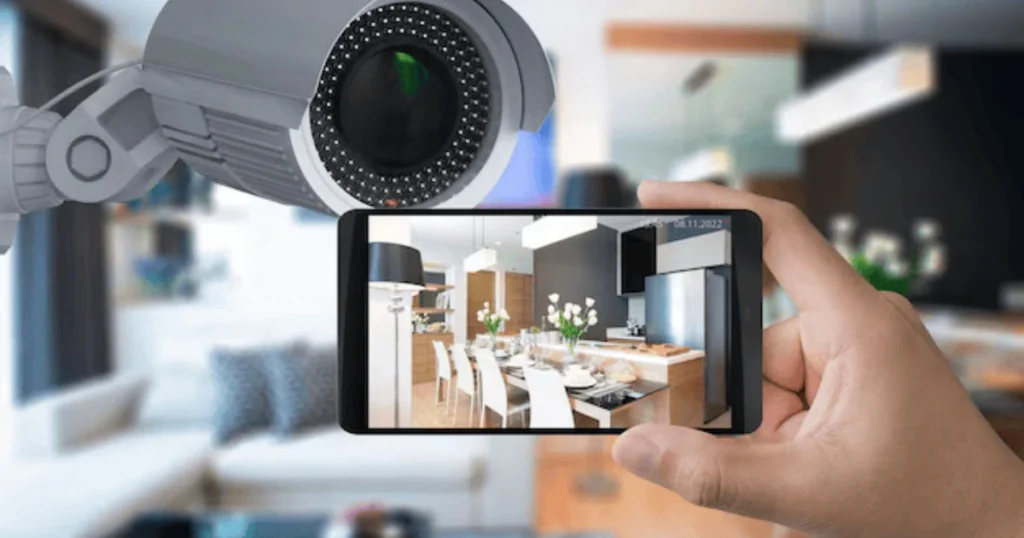
This is where facial recognition video monitoring transforms modern security systems. By combining AI-powered facial recognition with real-time surveillance, businesses can move beyond passive access control and adopt a more proactive approach.
Facial Recognition for Smarter Security
Facial recognition systems use advanced AI algorithms to identify individuals based on their unique facial features. As a result, they provide a far more secure and efficient alternative to traditional access control methods.
Unlike outdated systems, facial recognition technology:
- Cannot be shared, lost, or duplicated
- Works instantly without physical interaction
- Integrates seamlessly with existing video surveillance systems
- Enables real-time alerts and automated decisions
When combined with live video monitoring, it transforms into a complete, intelligent security ecosystem that actively prevents threats instead of simply recording them.
Facial Recognition Technical Specifications
Modern facial recognition systems are designed to perform reliably in real-world conditions. Therefore, they deliver both speed and accuracy across a wide range of environments.
Biometric Performance Metrics
- Accuracy: 99.7% across varying lighting conditions
- Identification Speed: Less than 0.3 seconds
- Capture Range: 3–15 feet for optimal recognition
- False Acceptance Rate (FAR): 0.001%
- False Rejection Rate (FRR): 0.1%
- Database Capacity: 50,000+ facial profiles
- Night Performance: 95%+ accuracy using infrared technology
These metrics ensure consistent and reliable identification, even in high-traffic or low-light environments.
Multi-Modal Authentication for Enhanced Security
To further improve accuracy and reduce errors, modern systems use multiple authentication layers. As a result, they maintain high performance even under challenging conditions.
Advanced Recognition Layers
- 3D Facial Mapping for depth-based identification
- Infrared Detection for low-light and night environments
- Thermal Recognition to detect heat signatures and prevent spoofing
- Backup Authentication Methods:
- Mobile credentials
- RFID access
- Voice pattern recognition
Facial recognition is more than just a security upgrade—it’s a shift toward intelligent, adaptive protection. By combining AI accuracy with multi-layer authentication, businesses can achieve faster access control, higher security, and minimal operational friction.
Why Traditional Access Control Is Failing
Most businesses still rely on outdated access control methods. However, these systems were designed for a different era and struggle to meet today’s security demands.
Common Limitations
- Keycards can be lost, stolen, or easily duplicated
- PIN codes are frequently shared among employees
- Manual logs are unreliable and prone to human error
As a result, these systems fail to provide true security.
The Core Problem
Traditional access control does not verify who is entering—it only verifies what they have. Because of this limitation, unauthorized individuals can gain access without being detected.
Security Risks Created
- Unauthorized access to restricted areas
- Internal misuse by employees or contractors
- Lack of accountability due to shared credentials
- No real-time threat detection or alerts
Over time, these gaps can lead to significant operational and financial risks.
The Smarter Alternative
Facial recognition technology solves these challenges by verifying identity instead of credentials. Therefore, access is granted based on who a person is—not what they carry or remember.
As security threats evolve, businesses must move beyond outdated systems. By adopting identity-based access control, organizations can achieve higher accuracy, stronger protection, and real-time threat prevention.
Improving access control with Facial Recognition

Traditional keycards and access codes are becoming obsolete. OHZ Remote Guarding offers a seamless and secure method of door entry using facial recognition technology. Imagine approaching your building’s entrance and effortlessly gaining access with a simple glance, eliminating the need for keys or badges. Our advanced facial recognition systems provide convenient access and enhance security by ensuring only authorized individuals enter.
Imagine walking up to your building entrance and the door unlocks instantly—no keys, no cards, no hassle. Our advanced facial recognition technology allows you to gain entry with just a glance. It’s a seamless experience designed for modern living and working environments.
Why switch to facial recognition access?
Enhanced Security
Only authorized individuals can enter. Facial data is unique and difficult to replicate, significantly reducing the risk of unauthorized access.
Hands-Free Convenience
No more fumbling for keycards or remembering access codes. Your face becomes your key.
Faster Entry
Instant recognition means quicker access, helping reduce queues and congestion at entry points.
Smart Monitoring
Track and manage access in real time with intelligent system insights, giving you better control over your property.
Future-Ready Solution
Upgrade your building with cutting-edge technology designed to adapt and scale with your security needs.
7 Core Applications of Facial Recognition
Here’s a detailed breakdown of 7 Core Applications of Facial Recognition:
1. Access Control (Hands-Free Entry)
Facial recognition provides a hands-free, efficient solution for controlling access to secure areas. Employees and authorized personnel can enter buildings, rooms, or restricted areas without needing keys, cards, or PINs. This system enhances both hygiene and speed, making it ideal for high-traffic environments.
2. Stay-Away Lists (Retail Theft Prevention)
For businesses, particularly in retail, facial recognition can be used to automatically flag known offenders when they enter the premises. This helps prevent theft and other criminal activities by providing instant alerts to security teams, ensuring that swift action can be taken.
3. VIP Whitelisting
Facial recognition can also be used for recognizing high-value clients or VIPs, enabling businesses to provide a more personalized experience. As soon as these individuals approach, the system identifies them, facilitating seamless access or special treatment based on their status.
4. Employee Time & Attendance Tracking
Eliminating the possibility of “buddy punching” or manual errors, facial recognition can ensure precise tracking of employee attendance. This system ensures that time logs are accurate, preventing fraudulent clock-ins and simplifying payroll processing.
5. Threat Blacklisting
Previously flagged individuals can be easily detected via facial recognition, ensuring that businesses can prevent repeat incidents. The system helps track offenders, adding them to a blacklist for future monitoring, thereby reducing recurring security threats.
6. Tailgating Prevention
One of the most critical issues in secure areas is tailgating, where unauthorized individuals gain access by following closely behind authorized ones. Facial recognition systems prevent this by ensuring only the registered individual is granted entry, blocking others who may attempt to bypass the system.
7. Missing Person Identification
In cases of emergencies or missing person situations, facial recognition can be employed to identify individuals across large areas, such as in airports, malls, or public spaces. The system can assist authorities in quickly locating and identifying missing persons or individuals flagged in security alerts.
Facial recognition is not just about security but also enhances operational efficiency, customer experience, and staff accountability. It’s a versatile solution that can adapt to various business needs, making it an essential tool for modern security and management systems.
Efficiently managing stay-away lists for enhanced security
Preventing theft and safeguarding assets is crucial in retail environments. OHZ Remote Guarding’s facial recognition capabilities with remote guarding security
allow businesses to create and manage stay-away lists for individuals previously engaged in shoplifting or other illicit activities. The system automatically flags and alerts security personnel when someone on the stay-away list is detected, proactively deterring theft and minimizing security risks.
With our intelligent video monitoring , businesses can create and manage stay-away lists—a database of individuals previously involved in shoplifting or other suspicious activities. When someone on this list enters the premises, the system instantly recognizes them and sends real-time alerts to security personnel.
How this enhances retail security:
Real-Time Identification
Quickly detects individuals on watchlists as soon as they enter your store.
Instant Alerts
Notifies security teams immediately, allowing for swift and informed action.
Theft Prevention
Discourages repeat offenders by identifying them early and reducing opportunities for theft.
Loss Reduction
Helps minimize shrinkage and protect profits through smarter surveillance.
Easy Management
Update and maintain stay-away lists effortlessly with a user-friendly system.

Streamlining time and attendance tracking
Tracking employee attendance is easier with remote guarding security facial recognition and video monitoring solutions. Integrating facial recognition technology with time and attendance systems allows employers to accurately record employee arrival and departure times. This eliminates manual timekeeping methods and ensures precise and efficient tracking of employee attendance.
By automating the attendance process, businesses can reduce the risk of human error and fraudulent timekeeping practices. Traditional methods, such as punch cards or manual entry, are prone to inaccuracies and can be easily manipulated. Facial recognition technology ensures that each entry is verified against a unique biometric profile, providing a higher level of accuracy and security.

The future of security lies in the innovative combination of facial recognition and video monitoring. OHZ Remote Guarding remains committed to staying at the forefront of these advancements to provide our clients with the highest level of security possible.
Enhance your employee efficiency and safeguard resources from internal theft with OHZ. Get a free security assessment now!
Facial Recognition vs Traditional Security Systems
When comparing facial recognition to traditional security methods, the differences in accuracy, speed, cost, scalability, and security level are clear. Here’s a side-by-side comparison to understand why facial recognition is becoming the preferred choice for modern security:
| Method | Accuracy | Speed | Cost | Scalability | Security Level |
|---|---|---|---|---|---|
| Keycards | 85% | 3 sec | Low | Limited | Moderate |
| PIN Codes | 78% | 5 sec | Low | Limited | Low |
| Fingerprint | 92% | 1 sec | Medium | Moderate | High |
| Facial Recognition | 99.7% | 0.3 sec | Medium | Unlimited | Very High |
Why Choose Facial Recognition?
- Higher Accuracy: Facial recognition systems offer nearly 100% accuracy, ensuring reliable verification of individuals.
- Faster Authentication: At 0.3 seconds, facial recognition provides the fastest authentication compared to traditional methods, enabling a smoother user experience.
- Greater Scalability: With facial recognition, there are no limits on the number of users or access points. It scales effortlessly, making it ideal for large properties or businesses.
- Stronger Fraud Prevention: The high security level of facial recognition, combined with its 99.7% accuracy, significantly reduces the risk of fraud, tailgating, and unauthorized access.
In summary, facial recognition stands out by providing faster, more secure, and scalable solutions compared to keycards, PINs, or even fingerprints, making it a game-changing technology in modern security systems.
How Real-Time Threat Detection Works?
Facial recognition systems are now a vital part of security, not just for identifying individuals but also for detecting threats in real-time. By taking immediate action, these systems can stop incidents before they escalate, ensuring better safety.
The OHZ 15-Second Response Protocol
The OHZ 15-Second Response Protocol is designed to respond to potential threats quickly and effectively. Here’s how it works:
- 0–0.3 seconds: The system captures the face and matches it against stored data.
- 0.3–2 seconds: A risk score is generated based on the potential threat.
- 2–10 seconds: The remote monitoring team verifies the situation in real-time.
- 10–15 seconds: The system takes action—access is either granted or denied.
This fast, step-by-step approach ensures quicker responses compared to traditional security methods, providing faster protection.
How the System Works in a Real-World Scenario
Let’s see the system in action with a real-world example:
- A flagged person enters a retail store. The facial recognition system immediately detects the individual.
- An alert is sent to the security team, who then calculates the risk score.
- A live audio warning is issued, aiming to deter the person.
- Store staff are alerted, and they prepare to take appropriate action.
- Authorities are contacted if necessary, preventing the situation from escalating
Is Facial Recognition Worth It?
Facial recognition technology offers more than just enhanced security—it delivers a significant return on investment (ROI). Unlike traditional security systems, facial recognition provides businesses with measurable financial benefits, such as increased efficiency, reduced crime, and streamlined operations.
Financial Impact of Facial Recognition
When implemented correctly, facial recognition offers several key financial advantages for businesses:
- Significant Reduction in Theft and Shrinkage: Businesses see a dramatic decrease in theft, both from external criminals and internal employees.
- Lower Labor Costs: By automating security tasks and reducing the need for on-site personnel, businesses can save on wages and minimize the need for additional security staff.
- Reduced Fraud and Internal Losses: Facial recognition technology reduces fraud, such as “buddy punching” and unauthorized access to sensitive areas.
- Insurance Premium Savings: With improved security, businesses may enjoy lower insurance premiums, leading to direct cost savings.
Example ROI Scenario
Here’s how facial recognition can generate ROI in a real-world retail setting:
Reduced Theft and Losses
A retail chain that adopted facial recognition saw an 80% reduction in theft.
Improved Staff Productivity
The system streamlined attendance tracking and automated processes, boosting staff productivity.
Eliminated Time Theft
With facial recognition, employees no longer engaged in time theft, such as “buddy punching.” The system ensured accurate clock-ins and outs.
ROI Achieved in the First Year
The business achieved ROI within the first year of implementation, far surpassing the initial investment in technology.
Why Facial Recognition Matters for Businesses
Facial recognition enhances security, but its true value lies in the financial benefits it offers. By reducing shrinkage, improving staff efficiency, and cutting operational costs, facial recognition technology delivers measurable ROI. Not only does it protect assets, but it also optimizes business operations, making it a worthwhile investment.
Privacy & Compliance: Addressing Concerns
One of the most pressing concerns regarding facial recognition technology is privacy. Businesses must balance the need for security with respect for individual privacy rights. Fortunately, modern facial recognition systems are designed with strict privacy safeguards to ensure compliance with privacy laws and regulations.
Key Privacy Safeguards
To ensure facial recognition systems meet high standards of privacy, OHZ implements several key safeguards:
- Data Encryption (AES-256): All captured data is securely encrypted, protecting sensitive information from unauthorized access.
- Minimal Storage Policies: Data is stored only for the necessary amount of time, and is regularly purged to avoid unnecessary retention.
- Consent-Based Enrollment: Individuals are only enrolled into the system after providing explicit consent, ensuring transparency and user control.
- Secure Access Logs: Access to data is tightly controlled, and access logs are maintained, tracking who views or modifies the data.
- Audit-Ready Systems: The system is always audit-ready, ensuring businesses can easily comply with legal and regulatory requirements when necessary.
Best Practices for Businesses
To ensure ethical use of facial recognition technology, businesses should follow these best practices:
- Use facial recognition in public areas only: Limit use to public spaces where individuals expect monitoring, such as parking lots or entrances.
- Avoid sensitive or private locations: Refrain from using facial recognition in areas where people have a reasonable expectation of privacy (e.g., bathrooms or locker rooms).
- Clearly inform users with signage: Display visible signage informing customers or visitors that facial recognition is in use on the premises.
- Maintain transparency in usage: Communicate regularly about the purpose of facial recognition, how the data is used, and how long it is stored.
When Implemented Correctly
When deployed correctly, facial recognition technology can be both secure and compliant. By following best practices and maintaining transparency, businesses can benefit from enhanced security while also protecting privacy and complying with relevant regulations.
Multi-Site Facial Recognition Management
For businesses with multiple locations, facial recognition technology offers a transformative solution. It enables organizations to manage security across all sites efficiently, ensuring a unified approach while maintaining top-notch protection.
Enterprise-Level Capabilities: Enhancing Security at Scale
Here’s how facial recognition technology enhances security for businesses with multiple sites:
Centralized Dashboard for All Locations
Manage and monitor all locations from a single platform. This provides real-time visibility and control, ensuring you can keep track of security across the board.
Real-Time Alerts Across Sites
Receive instant notifications for any security breaches or flagged incidents. This allows for a rapid response, no matter where the issue occurs.
Shared Security Intelligence
Benefit from data and insights gathered across all locations. The system becomes smarter over time, improving its ability to detect and respond to threats.
Employee Attendance Tracking
Track employee attendance across multiple locations. This reduces time theft and ensures greater accuracy in payroll processing.
Performance Analytics for Data-Driven Decisions
Access detailed reports and performance analytics to track security effectiveness and staff productivity across all sites. These insights help in making informed, strategic decisions.
Why Multi-Site Facial Recognition Matters
Multi-site facial recognition management simplifies the scaling of security operations without adding complexity. Whether you’re managing a small chain of stores or large corporate offices, this solution streamlines operations, reduces the need for manual intervention, and improves response times.
Additionally, it provides a unified security view across all locations, improving overall efficiency and enhancing decision-making.
FAQs
OHZ’s facial recognition solutions deliver high accuracy, fast response times, and seamless integration with existing systems. Our approach ensures GDPR and HIPAA compliance, reducing risks and improving operational efficiency across multiple properties.
Facial recognition accuracy in low light?
99.7% accuracy—OHZ uses IR illumination, 3D depth mapping, and thermal fusion to ensure high-quality recognition, even in low-light conditions.
How does OHZ handle privacy compliance?
OHZ is fully GDPR and HIPAA compliant. We operate with blacklist matching only, maintain 24-hour maximum storage, and delete data upon request.
Can OHZ integrate with existing CCTV?
Yes, OHZ can upgrade any IP/ONVIF camera to include facial recognition capabilities within 24 hours, making integration quick and hassle-free.
Stay-away list management process?
Our system syncs with police watchlists, utilizes an internal blacklist, and sends instant alerts to Remote Guards for immediate action.
Employee attendance fraud prevention?
Facial recognition eliminates buddy punching with 99.7% accuracy by creating a unique biometric profile for each employee.
Multi-property facial recognition scalability?
With OHZ, you can manage 100+ locations from a single dashboard and benefit from a 25% volume discount for multi-property clients.
Response time from face detection to alert?
Our system ensures 15 seconds or less from face detection to alert—this includes 0.3 seconds for identification, Remote Guard verification, and immediate action.
Does facial recognition work with masks/glasses?
Yes, facial recognition is 95% accurate even with masks or glasses. For additional identification, the system uses gait analysis as a backup.
Legal requirements for facial recognition use?
OHZ follows all GDPR guidelines, providing signage, consent forms, and conducting an annual compliance audit to ensure legal compliance.
Cost to add facial recognition to CCTV?
The cost to add facial recognition to existing CCTV is only $250 per month, compared to $6K/month for additional guards. That’s 96% cheaper!

Security content creator with OHZ Remote Guarding, focusing on advanced asset protection strategies during extended business closures and seasonal risks.